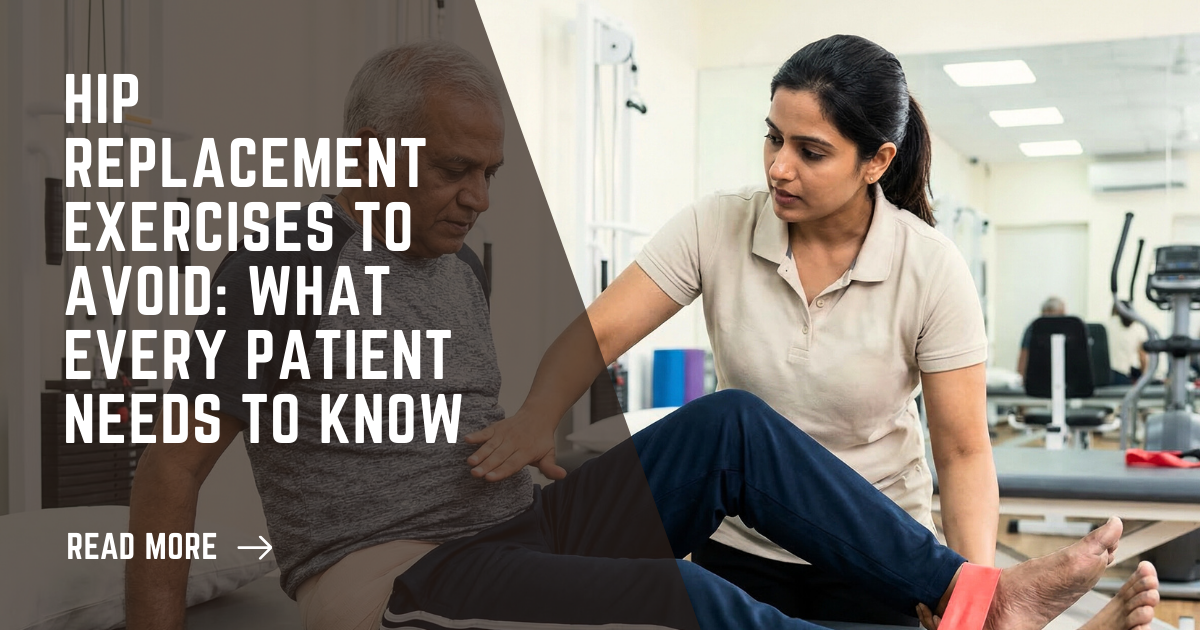
Dr Chintan Patel, hip and knee replacement surgeon at Sanjeevani Healthcare, Ghatkopar West Mumbai, has performed over 2,000 joint replacements. This guide is based on the recovery advice he gives every hip replacement patient before they leave the hospital. Hip replacement surgery is a life-changing procedure for many individuals. Patients who once struggled with pain and limited mobility are often able to walk comfortably, sleep better, and return to activities they had gradually stopped.
However, surgery is only one part of the process. Recovery plays an equally important role in determining how well the new joint performs in the long term. The way you move, the precautions you follow, and how you rebuild strength all influence the final outcome.
After surgery, many patients feel motivated to recover quickly and return to their routine. While this enthusiasm is positive, it is important that recovery is guided appropriately. Without proper direction, certain movements can lead to avoidable complications or delays in healing.
This guide explains which movements to avoid after hip replacement, why these precautions are necessary, what exercises are recommended, and how daily habits contribute to long-term joint protection.
Why Certain Movements Are Restricted After Hip Replacement
During hip replacement surgery, the damaged joint surfaces are replaced with artificial components designed for durability and smooth movement.
After surgery, the surrounding muscles, tendons, and joint capsule require time to heal and regain strength. During this phase, the joint is more vulnerable, and certain movements can place unnecessary stress on it.
These precautions are temporary and are intended to support proper healing. Following them during the early recovery phase helps reduce the risk of complications and supports long-term success.
Hip Replacement Exercises and Movements to Avoid
-
Deep Squats and Floor Sitting
Deep squatting places the hip in a position that exceeds safe limits during early recovery. This can increase stress on the joint while tissues are still healing.
Avoiding floor sitting and using raised seating arrangements is recommended until recovery progresses and clearance is given.
-
Crossing the Legs
Crossing the legs places rotational stress on the hip joint and can increase the risk of instability in the early stages of recovery.
This applies to both sitting and sleeping. Using a pillow between the knees while lying on the side helps maintain proper alignment.
-
Bending the Hip Beyond 90 Degrees
Excessive forward bending, such as reaching for objects on the floor or wearing footwear, can place the hip in a vulnerable position.
Using assistive devices or modifying movement patterns helps reduce strain during this phase.
-
Pivoting and Twisting Movements
Sudden turning or twisting on the operated leg can create rotational stress on the joint.
Movements should be slow and controlled while strength and balance are being restored.
-
High-Impact Activities
Activities such as running or jumping place repeated stress on the artificial joint.
Low-impact activities such as walking, cycling, and swimming are generally preferred for long-term joint health.
-
Heavy Weight Training Too Early
Strength training is important, but heavy lifting in the early phase can overload healing tissues.
Exercises should progress gradually under guidance.
-
Sitting on Low Surfaces
Low seating forces the hip into excessive bending and can make standing up more difficult.
Using firm, appropriately elevated seating reduces stress on the joint.
Exercises That Are Encouraged After Hip Replacement
Movement is essential for recovery. A structured rehabilitation programme helps restore strength, flexibility, and stability.
1. Early Stage (Weeks 1 to 2)
Focus is on circulation and gentle activation:
-
Ankle movements
-
Quadriceps activation
-
Glute exercises
-
Gentle range-of-motion exercises
-
Supported walking
2. Progressive Stage (Weeks 3 to 8)
Focus shifts to strength and stability:
-
Leg raises
-
Hip strengthening exercises
-
Stationary cycling
-
Gradual increase in walking distance
3. Strengthening Stage (After 8 Weeks)
Focus on functional recovery:
-
Step exercises
-
Resistance-based strengthening
-
Balance training
-
Low-impact activities
Stopping physiotherapy too early is a common issue. Recovery continues beyond the point where daily activities feel comfortable.
Everyday Habits That Support Recovery
Daily movements play an important role in protecting the new joint:
-
Use appropriately elevated seating
-
Maintain proper posture
-
Avoid sudden or rushed movements
-
Use assistive tools when required
-
Follow safe techniques for stairs and daily activities
Consistent attention to these habits supports smoother recovery.
How Long Do Precautions Last?
Recovery timelines vary between individuals.
In general:
-
Early precautions are most important in the first 6 to 8 weeks
-
Activity levels gradually increase
-
Return to routine activities depends on progress
Recovery is guided by individual milestones rather than fixed timelines.
Common Recovery Mistakes to Avoid
Two patterns commonly delay recovery:
-
Doing too much too soon
-
Stopping physiotherapy early
A balanced and guided approach helps achieve the best results.
Warning Signs That Require Medical Attention
Seek medical advice if you experience:
-
Sudden severe pain
-
Instability in the joint
-
Fever with swelling or redness
-
Calf pain or swelling
-
Difficulty bearing weight
Early evaluation helps prevent complications.
Frequently Asked Questions (FAQs):
Q1: Can I use an Indian-style toilet after hip replacement surgery?
No, not in the early recovery phase. Indian-style toilets require deep squatting which bends the hip beyond the safe limit of 90 degrees. Use a raised western-style toilet seat for at least the first 6 to 8 weeks. Your surgeon will advise when it is safe to change this based on your individual progress.
Q2: When can I start climbing stairs after hip replacement?
Most patients can manage stairs with support within the first 1 to 2 weeks one step at a time, leading with the non-operated leg going up and the operated leg going down. Independent stair climbing typically improves by weeks 4 to 6. Dr Chintan Patel guides each patient on their individual staircase readiness during follow-up visits at Sanjeevani Healthcare, Ghatkopar West.
Q3: How long do I need to follow hip replacement precautions?
The most important precautions avoiding deep squatting, crossinglegs, and bending beyond 90 degrees apply strictly for the first 6 to 8 weeks. Some precautions like avoiding high-impact activities continue long term to protect the artificial joint's lifespan.
Q4: Can I sleep on my side after hip replacement?
Not in the early weeks without precautions. Sleeping on the operated side is generally avoided. If sleeping on the non-operated side, place a firm pillow between the knees to prevent the legs from crossing or the hip from rotating inward both of which are restricted movements after surgery.
Q5: When can I drive after hip replacement surgery?
Driving is typically resumed between 4 to 8 weeks depending on which leg was operated, the type of vehicle, and your individual strength and reaction time. Your surgeon will assess this at a follow-up appointment. Do not drive until formally cleared.
Q6: Is physiotherapy really necessary after hip replacement or can I manage on my own?
Physiotherapy is essential not optional. The artificial joint needs the surrounding muscles to be strong and balanced for it to function correctly and last its full lifespan. Patients who stop physiotherapy early often have slower recovery and reduced long-term function. Dr Chintan Patel's team provides structured rehabilitation guidance throughout recovery.
Q7: Where can I get hip replacement surgery and post-operative care in Ghatkopar, Mumbai?
Dr Chintan Patel performs hip replacement surgery at Sanjeevani Healthcare, Ghatkopar West, and other leading Mumbai hospitals. Post-operative care and physiotherapy guidance are provided locally, making follow-ups easy for patients from Ghatkopar, Vikhroli, Powai, and Chembur. Call +917977335263 to book a consultation.