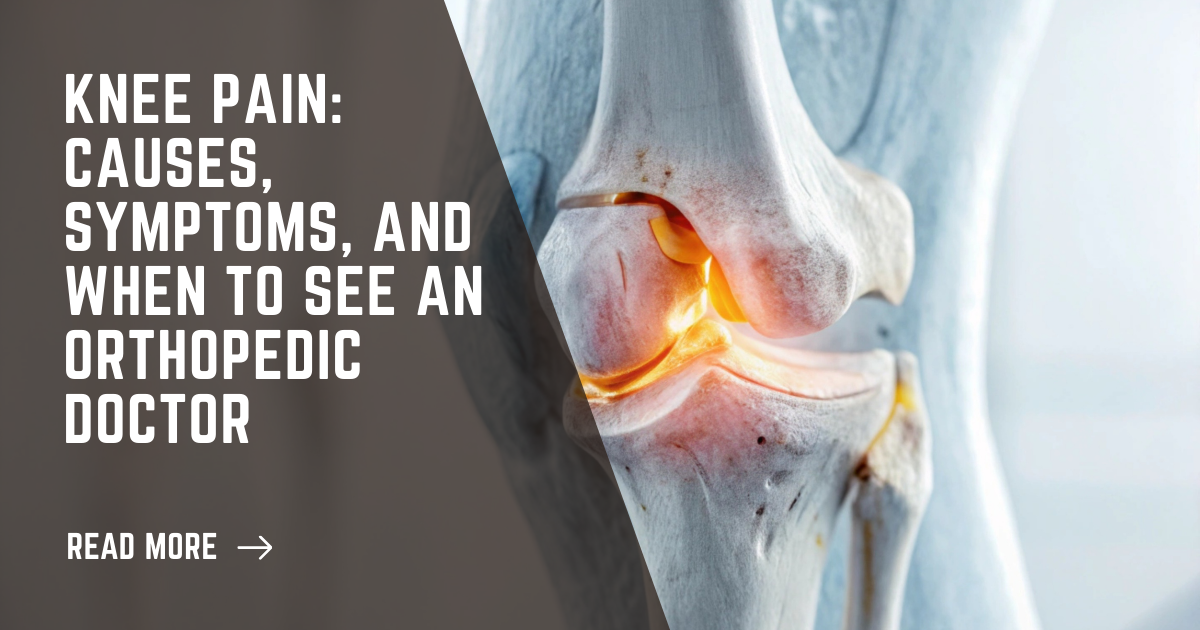
Dr Chintan Patel, orthopedic and knee specialist at Sanjeevani Healthcare, Ghatkopar West Mumbai, treats knee pain across all age groups, from sports injuries in young adults to arthritis in older patients. Knee pain is one of the most common reasons people seek orthopedic care. It affects people across all age groups, from young adults involved in sports and physical activity to older individuals experiencing age-related joint changes. In many cases, knee pain begins gradually and is easy to ignore. Over time, however, it can start interfering with walking, climbing stairs, exercising, and even routine daily activities.
In a city like Mumbai, where daily life often involves long hours of standing, walking, commuting, and frequent stair use, knee pain can quickly become a significant concern. Understanding the causes of knee pain, common symptoms, and knowing when to consult an orthopedic doctor in Mumbai can help prevent long-term joint damage and reduced mobility.
Understanding Knee Pain
The knee is one of the largest and most complex joints in the body. It supports body weight, absorbs impact, and allows movement such as bending, straightening, and rotation. Because the knee depends on the coordinated function of bones, cartilage, ligaments, tendons, and muscles, problems affecting any of these structures can lead to pain.
Knee pain may occur at the front, sides, or back of the joint. Some people experience sharp pain during movement, while others notice a dull ache or stiffness, especially after rest. Paying attention to when the pain occurs and what activities worsen it can provide important clues about the underlying cause.
Common Causes of Knee Pain
One of the most frequent causes of knee pain is gradual wear and tear of the joint. Over time, the cartilage that cushions the knee can thin out, leading to stiffness, pain, and reduced movement. This process is commonly associated with aging but can begin earlier in people with physically demanding lifestyles or previous injuries.
Injuries are another major cause of knee pain. Sudden twisting movements, falls, or sports-related trauma can damage ligaments, cartilage, or the meniscus. These injuries often cause pain, swelling, and a feeling of instability in the knee.
Overuse and repetitive strain can also contribute to knee pain. Activities such as frequent squatting, running, climbing stairs, or standing for long hours can place repeated stress on the knee joint, particularly when muscle strength or alignment is not optimal.
Inflammation within the joint or surrounding tissues may also result in pain and stiffness, sometimes accompanied by swelling and warmth around the knee.
Symptoms That Often Accompany Knee Pain
Knee pain is rarely an isolated symptom. It is often associated with stiffness, especially after periods of rest, swelling around the joint, and difficulty bending or straightening the knee. Pain during walking, climbing stairs, or standing up from a seated position is also common.
Some individuals may notice clicking, grinding, or locking sensations within the knee, while others experience a feeling that the knee may give way. Symptoms that persist or gradually worsen should not be ignored, as they may indicate progressive joint damage requiring knee pain treatment in Mumbai
Knee Pain During Daily Activities
Many people notice knee pain during specific movements rather than at rest. Pain while climbing stairs, getting up from a chair, or walking on uneven surfaces is particularly common.
In urban environments like Mumbai, where staircases, uneven roads, and crowded public spaces are part of everyday life, these activities can place additional strain on the knee joint. Pain that consistently interferes with routine activities is an important signal that further evaluation may be required.
Sports Injuries and Knee Pain
Sports and physical activities place unique demands on the knee joint. Sudden changes in direction, jumping, or rapid stops can lead to ligament injuries or cartilage damage.
Sports-related knee pain may occur suddenly after an injury or develop gradually with repeated activity. Swelling, instability, or difficulty bearing weight are common signs. Proper assessment is important to avoid recurrent injury, long-term instability, or early joint degeneration.
When Knee Pain Should Be Evaluated
While mild knee discomfort may improve with rest, certain situations require medical attention. Knee pain that lasts for more than a few weeks, swelling that does not settle, or increasing stiffness should be evaluated by an orthopedic doctor.
Pain that interferes with sleep, work, or daily movement is another important indicator. Knee pain following a fall, twist, or sports injury should also be assessed to rule out structural damage. Early consultation with a knee specialist in Mumbai often allows for simpler, non-surgical treatment options and better outcomes.
How Knee Pain Is Assessed
Assessment begins with a detailed discussion of symptoms, activity levels, and medical history. A physical examination helps evaluate joint movement, strength, stability, and areas of tenderness.
Imaging studies such as X-rays or other scans may be recommended to assess joint alignment, cartilage condition, or soft tissue structures. Accurate diagnosis is essential for planning appropriate treatment.
Treatment Options for Knee Pain
Treatment depends on the cause and severity of symptoms. In many cases, non-surgical management is effective, especially when knee problems are identified early.
This may include physiotherapy, strengthening exercises, pain-relieving medications, activity modification, and weight management. These measures aim to reduce pain, improve joint function, and prevent further damage.
When knee pain is caused by advanced joint degeneration or significant structural damage and does not respond to conservative treatment, surgical options may be considered to restore function and quality of life.
Importance of Timely Orthopedic Care
Delaying evaluation can allow knee problems to progress, making treatment more complex over time. Timely orthopedic consultation helps identify the cause of pain and ensures appropriate treatment planning.
For individuals living in Ghatkopar and surrounding areas of Mumbai, early access to orthopedic care also makes follow-up and rehabilitation more convenient, which plays an important role in recovery.
Dr. Chintan Patel is a Robotic Orthopedic Surgeon and Hip and Knee Specialist based in Ghatkopar, Mumbai, with experience managing a wide range of knee-related conditions through structured, patient-focused care.
Frequently Asked Questions (FAQs):
Q1: Why does my knee hurt only when climbing stairs or walking?
Stair climbing places 3 to 4 times more load on the knee than flat walking. If pain appears only during these activities, it is often an early sign of cartilage wear, weak thigh muscles, or the beginning of arthritis. It should not be ignored early treatment in Ghatkopar is simpler and avoids worsening joint damage.
Q2: What causes sudden sharp knee pain without any injury?
Sharp knee pain that comes on suddenly even without a fall or accident can be caused by a loose body inside the joint, a meniscus tear, or a sudden flare of arthritis. If the pain is severe, accompanied by swelling, or stops you from bearing weight, see an orthopedic doctor in Ghatkopar the same day.
Q3: Is knee pain normal at my age, or should I see a doctor?
Knee pain is common but it is never something to simply accept as normal. At any age, persistent pain lasting more than 2 to 3 weeks, pain that wakes you at night, swelling, or stiffness in the morning are all signs that require evaluation. Early diagnosis almost always means simpler treatment.
Q4: Can knee pain be treated without surgery?
Yes, the majority of knee pain conditions are treated without surgery. Physiotherapy, targeted exercises, weight management, activity modification, and in some cases injections can provide significant relief. Dr Chintan Patel's approach is always to explore non-surgical options first and recommend surgery only when genuinely required.
Q5: How long should I wait before seeing an orthopedic doctor for knee pain in Mumbai?
Do not wait more than 2 to 3 weeks if the pain is persistent. See a doctor immediately if the knee is swollen, if you heard a pop at the time of injury, if the knee feels unstable or gives way, or if you cannot put weight on it. For patients in Ghatkopar and nearby areas, Dr Chintan Patel is available at Sanjeevani Healthcare, Ghatkopar West.
Q6: What is the difference between knee pain from arthritis and knee pain from an injury?
Arthritis-related knee pain usually develops gradually over weeks or months, is worse in the morning or after rest, and affects both sides of the joint. Injury-related pain comes on suddenly, often after a specific incident, and may be accompanied by swelling, bruising, or instability. Both require orthopedic evaluation but are treated very differently.
Q7: Where can I see a knee specialist near me in Ghatkopar?
Dr Chintan Patel is a knee specialist at Sanjeevani Healthcare, Ghatkopar West, Mumbai. He serves patients from Ghatkopar East, Ghatkopar West, Vikhroli, Powai, Chembur, and surrounding areas. Call +917977335263 or visit the contact page to book a consultation.