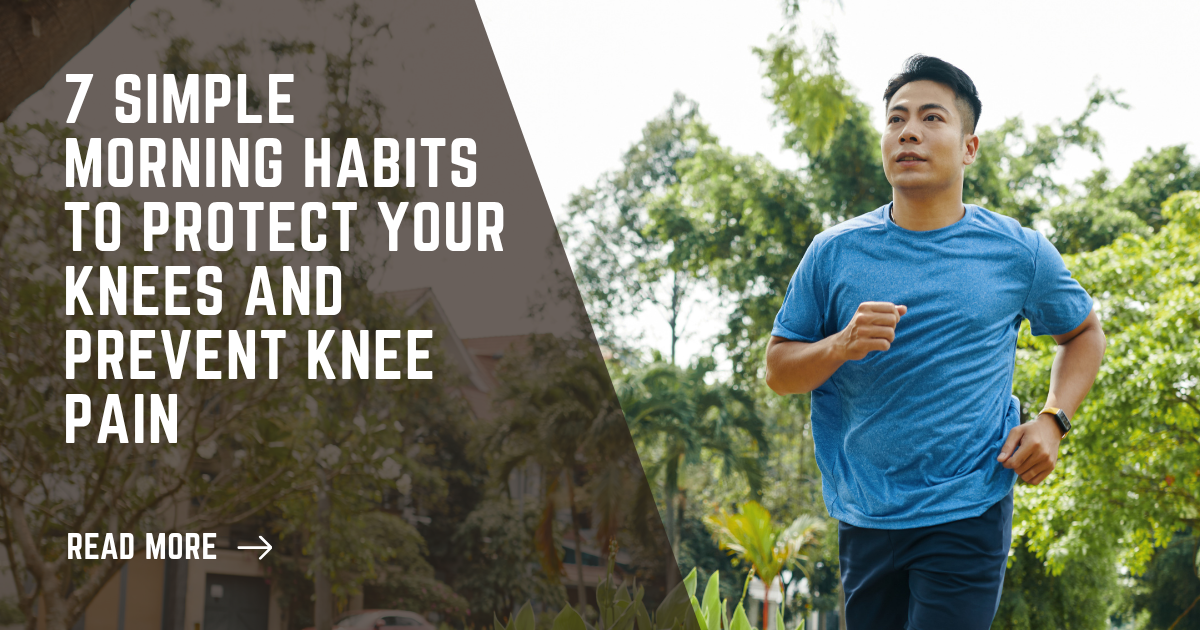
Knee pain often develops gradually rather than suddenly. In many people, it builds over time because of stiffness, weak supporting muscles, poor movement habits, or repeated daily strain. What many people do not realise is that the way you begin your morning can influence how your knees feel through the rest of the day.
The first hour after waking up matters. How you get out of bed, how you move, what you wear on your feet, and whether you prepare your muscles before activity can all affect how much stress your knees absorb. These may seem like very small habits, but when repeated consistently, they can support better joint comfort and function and help prevent knee injury over time.
This becomes even more important if you already notice early warning signs such as morning stiffness, discomfort while climbing stairs, pain after standing for long periods, or a feeling that your knees tire too quickly. These signs do not always mean there is a serious joint problem, but they do suggest that your knees may benefit from better daily support.
The good news is that a knee-friendly morning routine does not need to be long or complicated. A few simple actions, including morning exercises for knee pain, can help reduce unnecessary strain and support healthier movement.
Here are seven practical morning habits that can help protect your knees and reduce the risk of developing persistent knee pain.
1. Start with gentle movement before standing
After several hours of sleep, the body has been still for a long time. For many people, this means the knees feel stiff during the first few minutes after waking up.
Instead of getting out of bed suddenly, start with gentle movement. Bend and straighten your knees slowly, move your ankles up and down, or lightly tighten and relax your thigh muscles. These small movements help prepare the legs for standing and walking.
This is especially useful for people who feel stiff in the morning or uncomfortable during their first few steps. Even one or two minutes of gentle movement can help the knees feel more ready for the day.
2. Stretch the muscles around the knees
The knee works with the muscles above and below it. If the thighs, calves, or hips are tight, the knee may end up taking more strain during walking, climbing stairs, or standing.
A few gentle morning stretches can help reduce this tightness. Focus on the quadriceps, hamstrings, and calf muscles. If you sit for long hours during the day, stretching the hip flexors may also help.
Stretching should feel controlled and comfortable. It should not feel forced or painful. A simple calf stretch against a wall or a seated hamstring stretch is often enough to improve how the legs feel.
Over time, better flexibility can support smoother movement and reduce unnecessary stress on the knees.
3. Wake up the muscles that support the joint
Strong muscles help protect the knee. These simple movements form part of a basic knee strengthening routine that supports long-term joint stability.
When the thigh and hip muscles are weak or inactive, the knee often ends up carrying more load than it should.
Morning is a good time for a few simple activation exercises. These are not intense workouts. They are short movements that prepare the muscles to support you better through the day.
Examples include straight leg raises, quadriceps tightening, glute squeezes, mini bridges, or seated knee extensions. The aim is to activate the muscles that help stabilise the leg and improve control.
This can be especially helpful for people who spend a lot of time sitting, as prolonged sitting often reduces muscle engagement. Even five minutes of regular activation work can make a difference over time.
4. Get out of bed and start walking mindfully
Many people get out of bed quickly without thinking much about it. But if the knees are stiff or irritated, that sudden shift to standing can feel uncomfortable.
A better approach is to move in stages. Roll onto your side first, use your arms to push yourself up, place both feet on the floor evenly, and stand up slowly. Then pause for a moment before you start walking.
This gives the joints and muscles time to adjust and reduces the chance of sudden twisting or uneven loading. The first few minutes of walking in the morning should also be calm rather than rushed.
This small change can make mornings easier, especially for people who already notice mild knee discomfort.
5. Wear supportive footwear early
Footwear affects the knees more than many people realise. The feet are the first part of the body to take the load from the ground, and that force travels upward into the knees.
Walking barefoot on hard floors for long periods may not affect everyone, but for some people it increases knee discomfort, especially if they already have pain, poor alignment, or spend a lot of time standing.
Wearing supportive footwear early in the day can help improve comfort and reduce unnecessary stress. It does not have to be expensive. It simply needs to be stable, comfortable, and appropriate for regular walking and standing.
This is especially relevant if you spend a lot of time on hard flooring at home.
6. Hydrate and start the day sensibly
Hydration supports general body function, including muscles and soft tissues. Starting the day dehydrated can contribute to sluggishness and fatigue, which may affect how well the body moves.
A simple habit such as drinking water soon after waking up can help. Along with hydration, try not to rush into a demanding day without any nourishment at all. Low energy levels can affect posture, control, and muscular support.
This is not about following a strict food rule. It is about giving your body a better start so movement feels more supported and less strained.
7. Maintain better posture during routine tasks
Knee strain does not only come from exercise. It also comes from ordinary daily movement done poorly and repeated often.
Simple morning activities such as brushing your teeth, dressing, preparing breakfast, or standing in one place can all place uneven stress on the knees if posture is poor.
Common mistakes include standing with more weight on one leg, locking the knees, twisting carelessly, or bending awkwardly. A better approach is to stand evenly on both feet, keep the knees relaxed, and turn the whole body rather than twisting only through the legs.
These small corrections may not seem dramatic, but they can reduce repeated stress over time.
Why these habits matter
The knee is a weight-bearing joint that works all day. Because it is used so often, even small daily stresses can build up over time. That is why prevention usually depends on repeated small choices rather than one major change.
These habits can help by improving flexibility, activating supporting muscles, reducing impact stress, and encouraging better movement patterns.
They are not a substitute for treatment when there is an established injury, but they can support healthier long-term knee function.
When to seek medical advice
If knee pain keeps coming back, lasts more than a few days, causes swelling, makes stairs difficult, or creates a feeling of instability, it is worth getting it assessed.
Early consultation with a knee pain specialist in Ghatkopar can help identify the cause and guide the right treatment plan.
Locking, catching, or worsening stiffness also deserves attention.
Early evaluation can help identify the cause and guide the right treatment before the problem becomes more limiting.
Consult Dr. Chintan Patel for Knee Pain and Prevention
If you are experiencing knee discomfort or want guidance on protecting your joints better, professional evaluation can help identify the cause and the right next steps. Consult an experienced orthopedic doctor in Ghatkopar, Mumbai for personalised knee pain treatment in Mumbai and prevention strategies.
Dr. Chintan Patel specialises in knee, hip, and sports-related conditions, offering comprehensive care focused on accurate diagnosis, preventive strategies, and advanced treatment when required. He operates from his clinic in Mumbai as well as other prominent locations.
With the right guidance and consistent daily habits, many people can support healthier knee function and stay active with greater comfort.
Frequently Asked Questions (FAQs):
1. How can I prevent knee pain naturally at home?
You can prevent knee pain by following simple daily habits like doing morning stretches, maintaining a healthy weight, wearing supportive footwear, and following a regular knee strengthening routine. These steps help reduce stress on the knee joints and improve overall mobility.
2. What are the main causes of knee pain?
Common causes include muscle weakness, ligament strain, arthritis, overuse, poor posture, and injury. In many cases, repetitive daily habits and lack of proper movement support can gradually lead to knee pain.
3. Which exercises are best for strengthening knees?
Exercises like straight leg raises, squats (with proper form), hamstring stretches, calf raises, and quadriceps strengthening are effective. These help stabilise the knee joint and reduce the risk of injury.
4. When should I consult a doctor for knee pain?
You should consult an orthopedic doctor if knee pain lasts more than a few days, worsens over time, causes swelling, limits movement, or makes activities like walking and climbing stairs difficult.
5. Can walking reduce knee pain or make it worse?
Walking can help reduce stiffness and improve joint function if done correctly and in moderation. However, excessive walking or improper technique may worsen knee pain, especially if there is an underlying condition.