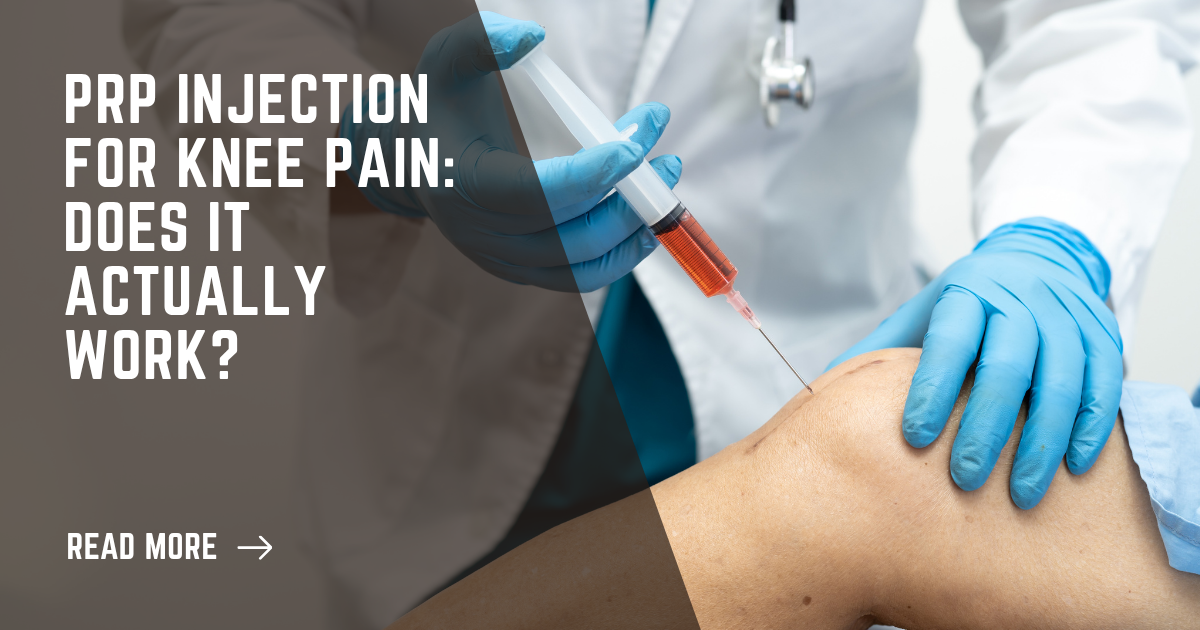
Knee pain can affect almost every part of daily life. Walking, climbing stairs, standing for long periods, exercising, or even getting up from a chair may gradually become uncomfortable. While many people initially manage these symptoms with rest, medications, or physiotherapy, there often comes a point when they begin exploring other treatment options.
One treatment that has gained increasing attention is the PRP injection for knee pain. Many patients hear about it through friends, family members, social media, or online articles and naturally wonder whether it could help their condition.
One of the most common questions people ask is, "Can PRP help me avoid surgery?"
The answer is not the same for everyone. PRP is not designed for every type of knee problem, and it is not the right treatment for every patient. Whether it is a suitable option depends on the underlying condition affecting the knee, the severity of symptoms, and an individual clinical assessment.
Understanding what PRP is, what it involves, and where it fits into the overall treatment journey can help patients make a more informed decision.
What Is PRP?
PRP stands for Platelet-Rich Plasma.
The treatment involves using a small sample of the patient's own blood. This blood is prepared before being injected into the affected knee as part of the procedure.
PRP is considered one of several non-surgical treatment options that may be discussed for certain patients with knee pain. It is important to understand that it is not intended to replace every other form of treatment, nor is it suitable for every stage of arthritis or every knee condition.
Many people come to a consultation expecting PRP to be a solution for all knee problems. In reality, whether it is appropriate depends on the condition of the knee and the goals of treatment.
This is why an individual assessment is important before deciding whether PRP is the right next step.
Why Do Patients Consider PRP?
Most people exploring PRP are looking for a treatment that may help them manage symptoms without immediately considering surgery.
Some patients are able to continue with their normal daily routine but experience discomfort during longer walks or physical activity. Others may have tried physiotherapy, medications, or lifestyle changes and are looking to understand what other options are available.
For some individuals, PRP becomes one of the treatments that may be discussed as part of a broader management plan.
The decision is never based simply on age or an X-ray report. Instead, it depends on several factors, including symptoms, daily activities, examination findings, and the overall condition of the knee.
Who May Be Considered for PRP?
There is no single checklist that determines whether someone should have PRP.
However, it may be discussed with patients who:
-
Have ongoing knee pain affecting daily activities
-
Have early to moderate joint changes
-
Are looking to explore non-surgical treatment options
-
Wish to remain active while managing their symptoms
-
Want to understand all available treatment options before considering surgery
Every knee is different. Two people with similar symptoms may not necessarily receive the same recommendation because treatment decisions are based on the complete clinical picture rather than one finding alone.
Patients exploring PRP treatment for knee arthritis in Mumbai often want to understand whether it fits into their individual situation rather than whether it is simply available.
When Might PRP Not Be the Most Suitable Option?
Just as PRP may be considered for some patients, there are situations where another treatment approach may be more appropriate.
For example, if the knee has advanced arthritis or significant structural changes, the discussion may focus on treatment options that are better suited to that stage of the condition.
Similarly, if knee pain is being caused by another problem, PRP may not address the underlying issue.
This is why proper assessment is important before deciding on any treatment. Choosing the most appropriate option depends on understanding the cause of the symptoms rather than selecting a treatment based on popularity alone.
What Happens During the Procedure?
One reason many patients ask about PRP is that the procedure is relatively straightforward.
It is usually performed as an outpatient procedure, which means hospital admission is generally not required.
The process begins with collecting a small blood sample. This sample is then prepared before the PRP is injected into the affected knee under appropriate sterile precautions.
After the procedure, patients are usually able to return home the same day.
The appointment itself is generally shorter than many people expect, and patients are usually given advice about returning to their normal routine over the following days.
The exact recommendations may vary depending on the individual patient and the treating doctor.
Will One Injection Be Enough?
This is another question that patients frequently ask.
There is no fixed answer that applies to everyone.
For some people, one session may be discussed as part of the treatment plan. Others may be advised differently depending on their symptoms and clinical assessment.
Rather than following the same approach for every patient, the treatment plan is tailored to the individual's condition and overall goals.
This is one of the reasons why a consultation is important before deciding whether PRP is appropriate.
When Might You Notice a Difference?
Patients are often curious about when they might begin noticing changes after the procedure.
The response varies from person to person.
Some people notice gradual improvement over time, while others may have a different experience. It is important to remember that every knee condition is different, and no treatment produces identical results for everyone.
Having realistic expectations before treatment helps patients make informed decisions and understand where PRP fits within their overall management plan.
PRP Is One Part of a Larger Treatment Plan
PRP should not be viewed as a standalone solution for every painful knee.
Managing knee pain often involves a combination of approaches depending on the individual's condition. These may include physiotherapy, activity modification, maintaining a healthy body weight, exercises, medications when appropriate, or other treatment options recommended during consultation.
The aim is always to select the approach that is most suitable for the patient rather than applying the same treatment to everyone.
For some people, PRP may become part of that plan. For others, another treatment may be more appropriate based on their symptoms and examination findings.
PRP vs Steroid Injection vs Hyaluronic Acid
Patients often ask which injection is "best" for knee pain. The answer is not always straightforward because each treatment may be considered for different situations. The most appropriate option depends on the underlying cause of knee pain, the stage of the condition, and the individual's treatment goals.
PRP
PRP is one of the non-surgical treatment options that may be discussed for certain patients with knee pain. It is generally considered after a detailed assessment rather than being recommended for everyone with arthritis or knee discomfort.
Steroid Injections
Steroid injections may also be considered in selected situations to help manage knee symptoms. Whether they are appropriate depends on the individual's condition and should always be discussed with an orthopaedic specialist.
Hyaluronic Acid
Hyaluronic acid injections are another treatment option that may be suitable for some patients. Like PRP and steroid injections, they are not intended for every type of knee problem.
Rather than asking which injection is better, it is often more helpful to ask which treatment is most appropriate for your specific knee condition.
Setting Realistic Expectations
One of the most important parts of any consultation is understanding what a treatment can and cannot do.
PRP should not be viewed as a cure for every type of knee pain. It is also not a replacement for surgery when surgery is the most appropriate treatment option.
Some patients choose PRP because they are looking for a non-surgical option to help manage their symptoms. Others may learn during their assessment that another treatment is more suitable for their condition.
The goal is always to select the treatment that best matches the patient's symptoms, examination findings, daily activities, and overall expectations.
Having realistic expectations from the beginning helps patients make informed decisions and understand the role of PRP within their overall treatment plan.
Is Surgery Always the Next Step If PRP Is Not Suitable?
Not necessarily.
If PRP is not considered the most appropriate treatment, it does not automatically mean surgery is required.
Depending on the condition of the knee, other conservative treatment options may still be discussed. These can include physiotherapy, activity modification, exercises, weight management, or other non-surgical approaches where appropriate.
If symptoms continue to affect everyday activities despite conservative treatment, surgery may become one of the options discussed during consultation. The decision is always based on the individual's symptoms, mobility, overall health, and treatment goals rather than a single scan or investigation.
Why an Individual Assessment Matters
No two patients experience knee pain in exactly the same way.
Some people have mild discomfort that mainly affects recreational activities. Others find that knee pain interferes with work, household tasks, walking, or climbing stairs.
Even when imaging findings appear similar, treatment recommendations may differ because symptoms, activity levels, lifestyle, and expectations vary from person to person.
This is why choosing a treatment based solely on something seen online or recommended by someone else may not always be appropriate. A proper assessment helps determine the underlying cause of knee pain and whether PRP forms part of the most suitable treatment plan.
Taking the Next Step
If knee pain has started limiting your daily routine, it may be helpful to seek an assessment rather than continuing to manage the symptoms on your own.
Understanding the cause of the pain is the first step towards deciding which treatment options may be appropriate. In some situations, conservative measures continue to be the most suitable approach. In others, treatments such as PRP may be discussed as part of an overall management plan.
The focus is always on helping patients understand their options so they can make informed decisions about their care.
Consult Dr. Chintan Patel for Knee Pain and Non-Surgical Treatment Options
If you are experiencing knee pain or would like to understand whether PRP is an appropriate option for your condition, a professional assessment can help identify the cause of your symptoms and discuss the most suitable treatment options.
Dr. Chintan Patel is a robotic orthopaedic surgeon specialising in knee and hip replacement. He provides comprehensive orthopaedic care focused on accurate diagnosis, conservative treatment where appropriate, and advanced surgical care when required. He operates from his clinic in Mumbai as well as other prominent locations.
Whether you are exploring PRP treatment for knee arthritis in Mumbai, looking for non-surgical knee pain treatment in Ghatkopar, or simply want to understand your treatment options, an individual consultation can help you decide on the most appropriate next step.
Frequently Asked Questions
1. Is a PRP injection suitable for every type of knee pain?
No. PRP may be suitable for some patients but not for everyone. The decision depends on the cause of knee pain and an individual clinical assessment.
2. Is the PRP procedure performed in the hospital?
In many cases, PRP is performed as an outpatient procedure, allowing patients to return home the same day. Your doctor will explain what to expect based on your individual situation.
3. Will I need more than one PRP injection?
The number of sessions varies from person to person. Your treatment plan will depend on your symptoms, examination findings, and discussion with your orthopaedic specialist.
4. How soon can I return to my normal routine after PRP?
This varies between individuals. Your doctor will provide guidance based on your condition and the treatment plan recommended for you.
5. How do I know whether PRP is the right option for me?
A detailed consultation and clinical assessment help determine whether PRP is an appropriate option or whether another treatment approach may be more suitable.
6. Where can I consult Dr. Chintan Patel for PRP treatment?
Dr. Chintan Patel consults patients from his clinic in Mumbai as well as other prominent locations. If you are looking for guidance on non-surgical knee pain treatment in Ghatkopar or would like to understand whether PRP is suitable for your knee condition, you can schedule a consultation for an individual assessment.