

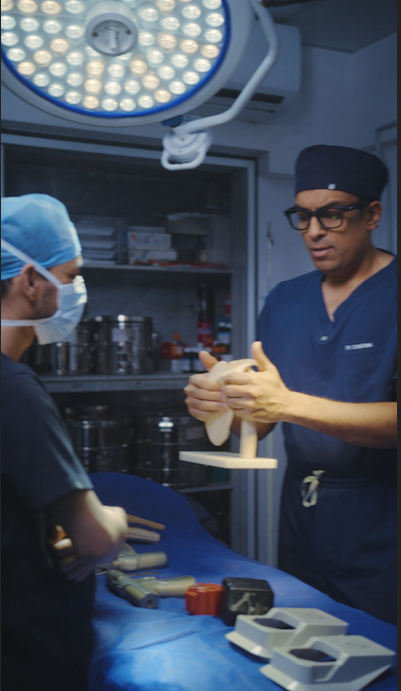
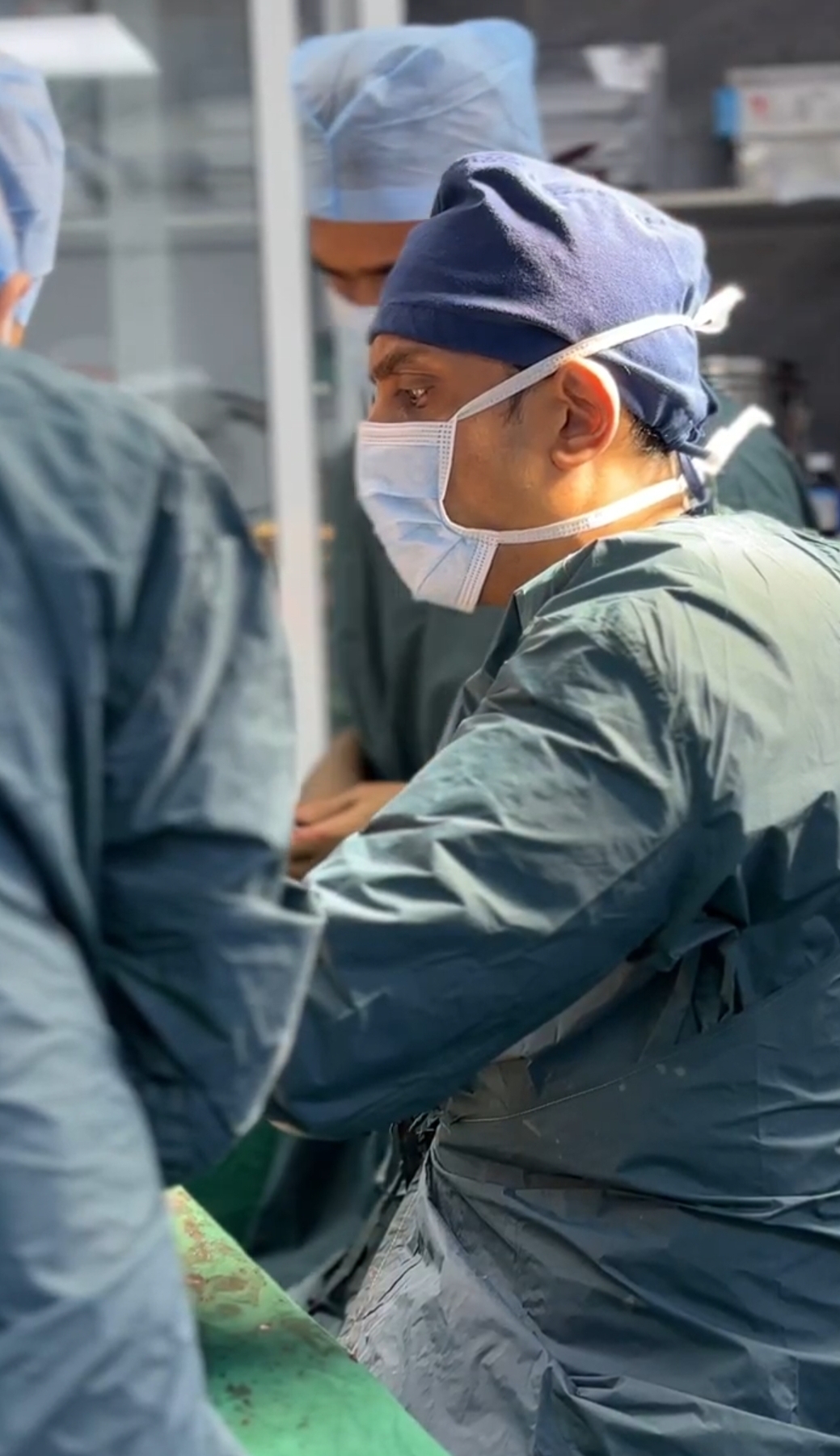
Robotic joint replacement uses advanced 3D mapping to guide the surgeon with greater precision during knee or hip replacement. The robot does not perform the surgery; it assists the surgeon in planning implant size, alignment, and placement with sub-millimeter accuracy. This improves balance, reduces soft-tissue damage, and supports smoother, more predictable recovery.

People with severe arthritis, long-standing joint pain, failed conservative treatments, or difficulty with daily activities may benefit from robotic surgery. It is especially useful for patients who want predictable outcomes, better alignment, and a more natural-feeling joint. Final suitability is always assessed during a clinical evaluation.
Robotic knee replacement helps restore natural knee movement by improving implant accuracy and ligament balance. The system creates a personalized 3D model of your knee, allowing precise cuts and better alignment. Many patients walk the same day and return home within two to three days, with a recovery that often feels smoother and more stable.
Robotic hip replacement improves accuracy in implant positioning, helping reduce the risk of dislocation and creating a more natural hip motion. The technology is especially beneficial in younger patients, athletes, or those with complex hip anatomy. By combining advanced planning with real-time guidance, it supports a safer procedure and better long-term function.
| Aspect | Traditional Surgery | Robotic-Assisted Surgery |
|---|---|---|
| Implant placement | Based on visual judgment | Guided by 3D planning |
| Precision | Depends on experience | Higher accuracy, consistent |
| Recovery | Standard pace | Often smoother, quicker |
| Tissue Handling | More manual variation | Reduced unnecessary cuts |
| Balance | May require adjustments | Improved ligament balancing |
Yes. The surgeon controls every step while the robot provides guidance for improved accuracy and safety.
Costs may be slightly higher, but many patients appreciate the precision, comfort, and smoother recovery.
Most patients experience reduced pain and better stability, but recovery varies based on age, fitness, and physiotherapy.
No. Robotic surgery requires specialized training and certification, which Dr. Chintan has completed.
Depending on the procedure, most patients can go home the next day, with minimal hospital stay required.
Yes. Most major insurance companies cover robotic procedures just like standard ones. Check with your provider.
Regular follow-ups help ensure smooth recovery and optimal results. Your surgeon will guide you on schedule.
Risks are minimal and similar to traditional surgery. The robotic system increases precision, reducing complications.