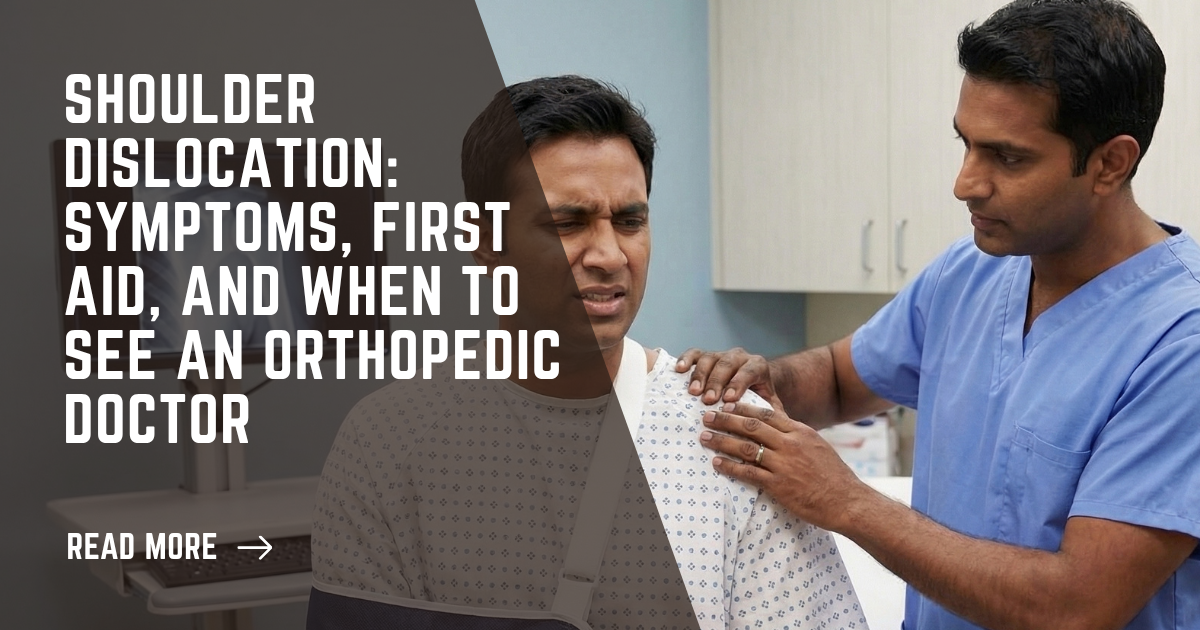
A shoulder dislocation is one of the more painful joint injuries a person can experience. It often happens suddenly during a fall, sports activity, road accident, or awkward forceful movement. In a matter of seconds, the shoulder can move out of place, causing intense pain, difficulty moving the arm, and sometimes a visible change in the shape of the joint.
Many patients searching for shoulder dislocation treatment in Ghatkopar experience sudden pain, instability, and difficulty moving the arm after such injuries. Because the shoulder is the most mobile joint in the body, it is also one of the joints most vulnerable to instability. This increased mobility can lead to shoulder joint instability, especially after an injury or repeated stress.
Many people assume that once the shoulder is put back in place, the problem is over. In reality, a dislocation can also affect the ligaments, capsule, cartilage, and surrounding muscles that help keep the joint stable.
In some cases, associated injuries such as a rotator cuff injury may also be present and require proper evaluation. That is why early evaluation and the right treatment plan are important. This guide explains what a shoulder dislocation is, the common causes and symptoms, what first aid should look like, how treatment is usually done, and when it is important to see an orthopedic doctor.
What Is a Shoulder Dislocation?
The shoulder is a ball and socket joint. The top of the arm bone, called the humeral head, fits into a shallow socket in the shoulder blade. This design allows the shoulder to move in many directions, which is why it is so useful for lifting, reaching, rotating, throwing, pushing, and pulling.
That same flexibility also makes the shoulder less naturally stable than some other joints. Instead of relying only on bone shape, the shoulder depends heavily on soft tissues such as the ligaments, joint capsule, labrum, and surrounding muscles to stay centred and secure.
A shoulder dislocation happens when the ball of the upper arm bone comes out of the socket. In most cases, it moves forward. This is known as an anterior shoulder dislocation. Less commonly, it may move backward or in another direction depending on how the injury occurred.
For the patient, the experience is often obvious. The shoulder may look different, feel stuck, and become too painful to move normally.
Why Shoulder Dislocations Are So Common
Shoulder dislocations are common because the joint prioritises mobility over deep bony stability. This is useful for movement, but it also means the shoulder can become unstable when a strong force pushes it beyond its normal range.
Common causes include:
-
falling on an outstretched hand
-
falling directly onto the shoulder
-
sports injuries, especially in contact or overhead sports
-
sudden twisting of the arm
-
road traffic accidents
-
gym injuries involving poor control or heavy force
-
previous instability that makes repeat dislocation more likely
Younger patients often experience shoulder dislocations during sports or high-demand activity. Older adults may sustain them during falls, sometimes with associated injuries around the shoulder.
Symptoms of a Shoulder Dislocation
The symptoms are usually quite noticeable, although the exact presentation can vary depending on the severity of the injury and whether it is a first-time or recurrent dislocation.
Common symptoms include:
-
sudden and severe shoulder pain
-
visible change in shoulder shape or contour
-
inability to move the arm normally
-
a feeling that the shoulder has slipped out of place
-
swelling around the joint
-
bruising over the next few hours or days
-
weakness in the shoulder or arm
-
numbness or tingling in some cases
-
holding the arm close to the body for comfort
Some patients describe the shoulder as feeling stuck or hanging abnormally. Others mainly notice the pain and immediate loss of movement.
It is also important to remember that not every dislocation looks dramatic from the outside. In some cases, especially if swelling is significant or the joint has partially shifted and then returned, the deformity may be less obvious. That is why the story of the injury, pain level, and restriction of movement all matter.
First Aid for Shoulder Dislocation
What you do immediately after a shoulder dislocation matters. The aim is not to fix the shoulder yourself. The aim is to protect the joint and avoid making the injury worse until medical care is available.
Do Not Try to Push It Back Yourself
This is one of the most important points. Trying to force the shoulder back into place without proper training can make the injury worse. It may increase pain and can potentially harm nearby nerves, blood vessels, cartilage, or soft tissues.
Even if someone nearby thinks they know how to relocate it, it is safer not to attempt this outside a proper medical setting.
Keep the Arm Still
Support the arm in the most comfortable position possible. A sling is ideal, but if one is not available, the arm can simply be supported against the body using a cloth or towel.
The less unnecessary movement there is, the lower the chance of worsening pain or straining already injured tissues.
Apply Ice
A cold pack can help reduce swelling and provide some symptom relief. Ice should be wrapped in cloth and not applied directly to the skin. Short intermittent use is usually enough until medical evaluation is available.
Seek Medical Attention Promptly
A dislocated shoulder should always be assessed by a trained medical professional. Proper examination and imaging help confirm the diagnosis and identify any associated injury such as a fracture or soft tissue damage.
What Happens at the Hospital or Clinic?
Once the patient reaches a medical facility, the next steps usually involve confirming the diagnosis, managing pain, and safely restoring the joint position.
Clinical Examination
The doctor will examine the shoulder, ask how the injury happened, and check for pain, deformity, movement limitation, numbness, or weakness. Circulation and nerve function are also important parts of the assessment.
X-rays
X-rays are commonly used to confirm that the shoulder is dislocated and to check whether there is an associated fracture. This is important because treatment may differ if a fracture is also present.
Reduction
Reduction means putting the shoulder back into place. This is done using controlled medical techniques, often after providing pain relief and in some cases sedation or muscle relaxation. The exact method depends on the case and the patient’s comfort.
Once the shoulder is reduced, many patients feel significant relief compared with the pain they had before. But the injury is not fully healed at that point.
Reassessment
After reduction, the shoulder is usually rechecked. Follow-up imaging may also be done to confirm that the joint is back in the correct position.
What Happens After the Shoulder Goes Back in Place?
This is where many patients misunderstand the injury. Pain often decreases after the shoulder is relocated, but healing is still ongoing.
When the shoulder dislocates, the stabilising tissues around the joint may be stretched or injured. These can include the capsule, ligaments, labrum, and surrounding muscles. That is why simply putting the shoulder back into place is not the end of treatment.
The next phase focuses on protecting the joint, allowing healing, and gradually restoring function without triggering another episode.
Recovery After Shoulder Dislocation
Recovery depends on factors such as age, activity level, severity of injury, whether it is the first dislocation, and whether there are associated injuries.
Sling Support
The arm is often kept in a sling for a short period after reduction. The exact duration varies depending on the individual case. The idea is to let the tissues settle while avoiding unnecessary movement.
Pain Control and Rest
Pain usually improves over the first few days, but activity often needs to be modified during this time. Overloading the shoulder too early can interfere with recovery.
Physiotherapy and Rehabilitation
Rehabilitation is a key part of treatment. Once the shoulder is ready, exercises are introduced gradually to help:
-
restore movement
-
strengthen the shoulder and surrounding muscles
-
improve movement control
-
support long-term stability
This stage is important because a shoulder that feels better is not always a shoulder that is fully stable.
Return to Activity
Daily activities are resumed gradually. Return to sports, gym training, overhead work, or physically demanding tasks depends on progress, examination findings, and professional guidance.
Why Some Patients Get Recurrent Shoulder Dislocations
A first-time dislocation is not always the end of the problem. Some patients go on to have repeated episodes of instability or recurrent dislocation, especially if the shoulder remains vulnerable after the initial injury.
This is more common in younger active individuals and in those who return to sport too early or have structural injury inside the joint.
Possible reasons include:
-
incomplete healing of supporting tissues
-
ligament laxity
-
muscle weakness
-
poor rehabilitation
-
damage to structures such as the labrum
-
repeated overhead or contact stress
Recurrent dislocations can affect confidence, movement, and long-term shoulder function.
When Is Surgery Considered?
Not every shoulder dislocation requires surgery. Many patients improve with reduction, rest, rehabilitation, and follow-up care. However, surgery may be considered in certain situations.
These include:
-
repeated dislocations
-
ongoing instability
-
associated structural injury
-
inability to return to expected activity due to instability
-
inadequate improvement with non-surgical treatment
The aim of surgery is to improve stability by addressing the damaged structures contributing to the problem. The decision depends on the patient’s age, lifestyle, activity level, history of instability, examination findings, and imaging.
Common Mistakes After Shoulder Dislocation
Some common patterns can affect recovery or increase the risk of future instability.
Assuming the Problem Is Over Once Pain Improves
Pain relief after reduction is encouraging, but it does not mean the shoulder has fully recovered. The soft tissues still need time and rehabilitation.
Returning to Activity Too Early
Going back too soon to sports, gym workouts, lifting, or physically demanding activity can place the healing shoulder at risk.
Skipping Physiotherapy
Some patients stop rehab once pain improves. That can leave the shoulder weaker and less stable than it should be.
Ignoring Repeated Slipping Sensations
Even if the shoulder does not fully dislocate again, repeated sensations of slipping or shifting deserve proper assessment.
When Should You See an Orthopedic Doctor?
A shoulder dislocation always requires medical attention, but some situations are especially urgent.
Seek immediate care if:
-
the shoulder looks visibly out of place
-
pain is severe
-
you cannot move the arm
-
there is numbness, tingling, or weakness
-
the injury happened after a fall, impact, or road accident
You should also see an orthopedic doctor if:
-
pain continues after the initial event
-
the shoulder feels unstable
-
movement remains limited
-
you have had more than one dislocation
-
you are physically active and want guidance for safe return
Early assessment helps determine whether the injury is a straightforward dislocation or whether there is associated instability that needs closer attention.
Long-Term Outlook After Shoulder Dislocation
The long-term outcome depends on the type of injury, the age of the patient, adherence to rehabilitation, and whether the joint becomes unstable again.
Many patients recover well and return to normal activity with the right treatment and guided rehabilitation. Others may continue to feel weakness, apprehension, or instability, especially if the shoulder has dislocated more than once.
The aim of treatment is not just to put the shoulder back in place. It is to restore comfort, confidence, movement, and function while reducing the risk of repeat injury.
Can Shoulder Dislocation Be Prevented?
Not every shoulder dislocation can be prevented, especially those caused by sudden trauma. But some steps may reduce risk, particularly in active individuals and those with a previous history of instability.
Helpful measures include:
-
strengthening the shoulder and upper back muscles
-
maintaining flexibility and balanced movement
-
using proper sports technique
-
warming up before training
-
addressing early instability symptoms
-
not ignoring repeated shoulder slipping or pain
A well-conditioned shoulder is generally better able to tolerate physical stress and maintain control during movement.
Consult Dr. Chintan Patel for Shoulder Injuries
If you have had a shoulder dislocation, repeated shoulder slipping, or persistent instability, proper evaluation can help determine the right next step.
Dr. Chintan Patel specialises in sports injuries, joint conditions, and orthopedic problems affecting the shoulder, hip, and knee. His approach focuses on careful diagnosis, patient education, non-surgical treatment where appropriate, and surgical care when needed. He operates from his clinic in Mumbai as well as other prominent locations.
With timely treatment and a structured recovery plan, many patients are able to return to everyday activities with better shoulder comfort, movement, and confidence.
Frequently Asked Questions (FAQs)
What is the treatment for shoulder dislocation?
Shoulder dislocation treatment in Mumbai typically includes reduction, rest, immobilisation, and physiotherapy depending on the severity of the injury.
Can shoulder dislocation heal without surgery?
Yes, many cases improve with non-surgical shoulder injury treatment, but recurrent instability may require surgical intervention.
What is shoulder joint instability?
Shoulder joint instability occurs when the shoulder repeatedly slips out of place or feels loose, often after a previous dislocation.
Is rotator cuff injury common with shoulder dislocation?
Yes, especially in older patients, a rotator cuff injury can occur along with shoulder dislocation and may need additional treatment.
When should I see a shoulder specialist?
You should consult a shoulder specialist in Ghatkopar or an orthopedic surgeon in Ghatkopar Mumbai if you experience pain, instability, or repeated dislocations.