Knee pain can affect people in very different ways. For some, it starts as a mild discomfort that appears during activity and gradually becomes more noticeable over time. For others, it may follow a sudden injury, making walking, bending, or even simple movements uncomfortable.
As patients try to understand what is happening inside the knee and what treatment options are available, one term often comes up: arthroscopy. It is commonly referred to as “keyhole surgery,” but many people are unsure about what that actually means, when it is needed, and what recovery looks like.
Understanding arthroscopy in clear, simple terms helps remove uncertainty. It allows patients to approach treatment decisions with more clarity and realistic expectations, especially when dealing with conditions such as ligament injuries, cartilage problems, or meniscus tears.
What Is Arthroscopy in Simple Language
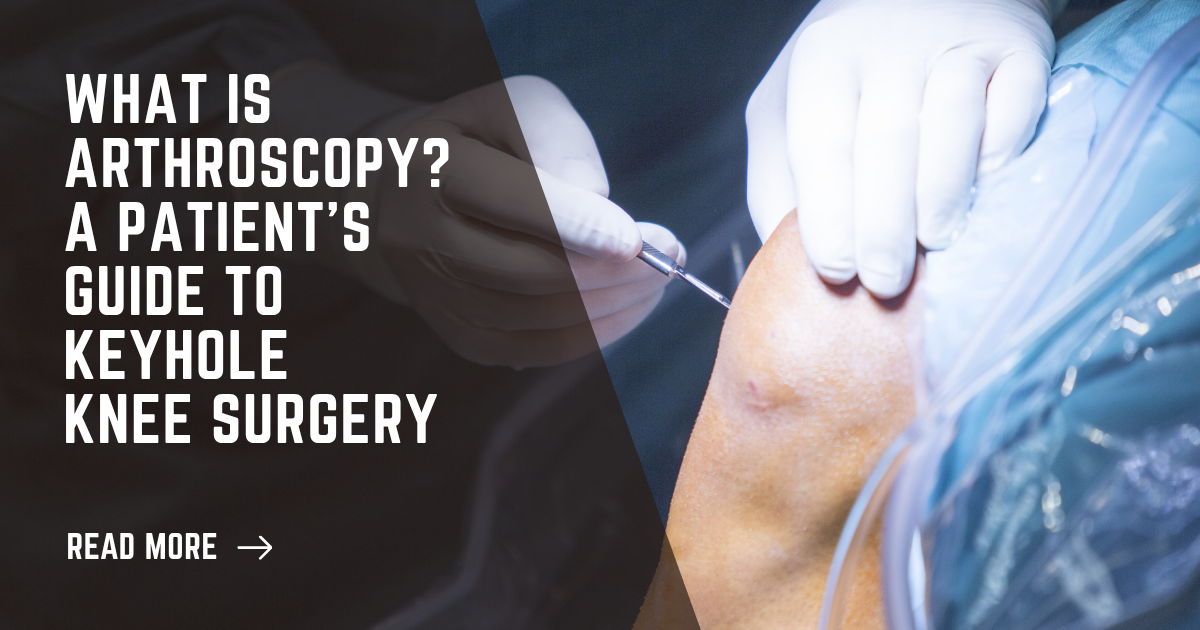
Arthroscopy is a procedure used to look inside a joint and treat certain problems using small instruments. Instead of opening the joint with a large cut, the surgeon uses a small camera inserted through a tiny incision. This camera shows the inside of the knee on a screen, allowing a clear view of the structures within the joint.
Because the incisions are small, arthroscopy is often described as keyhole knee surgery. The idea is simple: access the joint in a less invasive way while still being able to understand and address the problem.
This approach allows both diagnosis and treatment to happen together in many cases. If a specific issue is identified during the procedure, it can often be managed at the same time.
For patients, this usually means a more comfortable recovery experience compared to larger open procedures, although proper rehabilitation is still essential.
Why Arthroscopy Is Commonly Recommended
Knee joints are complex structures made up of ligaments, cartilage, and supporting tissues that all work together to allow smooth movement. When something inside the joint is not functioning properly, symptoms such as pain, swelling, locking, or instability may appear.
In situations where symptoms continue despite rest, medication, or physiotherapy, further evaluation becomes necessary. Arthroscopy provides a way to directly assess what is happening inside the joint.
It is not used for every knee problem, but it becomes relevant when there is a need to understand or treat issues that cannot be managed through simple measures alone.
What Conditions Can Arthroscopy Help With
Arthroscopy knee surgery is commonly used in the management of several knee conditions. These include ligament-related injuries such as ACL tears, meniscus injuries, and certain cartilage-related problems.
It may also be used when there are loose fragments within the joint or when the knee feels stuck or locked during movement. In some cases, it helps assess joint structures more closely when symptoms are not clearly explained by scans or physical examination.
Each patient’s situation is different, which is why arthroscopy is considered based on symptoms, lifestyle, and how much the condition is affecting daily life.
How Arthroscopy Differs from Open Surgery
One of the main reasons arthroscopy is widely used is the difference in how it is performed compared to traditional open surgery.
Open surgery involves a larger incision to directly access the joint. While it is still necessary in certain situations, it involves more exposure of tissues around the joint.
Arthroscopy, on the other hand, uses small incisions and a camera-based system. This allows the inside of the knee to be visualised without opening the joint fully.
Because of this, patients often find that the immediate recovery feels more manageable. The procedure is usually shorter, and in many cases, it is done as a day-care procedure, meaning patients can return home on the same day.
However, it is important to understand that while the procedure may be less invasive, recovery still requires time, patience, and proper rehabilitation.
What to Expect on the Day of Arthroscopy
Many patients feel more comfortable when they know what to expect on the day of the procedure.
Arthroscopy is usually performed under appropriate anaesthesia. Once the knee is prepared, small incisions are made to insert the camera and instruments.
The camera allows the inside of the joint to be seen clearly on a screen. Based on what is found, the necessary steps are taken to address the issue.
After the procedure is completed, the instruments are removed, and the small incisions are closed. Because the cuts are minimal, they usually heal relatively quickly.
Patients are typically observed for a short period before being discharged. In many cases, this happens on the same day, although this can vary depending on the individual situation.
Arthroscopic Surgery: What to Expect After the Procedure
The period after surgery is when recovery truly begins.
In the first few days, the focus is on allowing the knee to settle. Mild swelling, stiffness, or discomfort may be present, but these usually improve gradually with rest and basic care.
Many patients are able to stand and walk with support within a short time, depending on comfort levels. Early movement is generally encouraged because it helps maintain circulation and prevents stiffness.
Over the following days and weeks, movement becomes easier. Physiotherapy is usually introduced to help restore strength, flexibility, and control.
This stage is important because while the procedure addresses the internal issue, the surrounding muscles and joint function need to be rebuilt through guided exercises.
Understanding arthroscopic surgery what to expect helps patients approach recovery more confidently and avoid unnecessary worry.
Keyhole Knee Surgery Recovery
Recovery after keyhole knee surgery does not happen all at once. It progresses step by step.
In the early phase, the focus is on gentle movement and reducing swelling. Walking becomes easier as the knee settles, and daily activities are gradually resumed.
As recovery progresses, strengthening exercises become more important. These help support the joint and improve overall movement quality.
Most patients notice steady improvement over the first few weeks. However, the exact timeline varies depending on the condition treated, individual health, and consistency with rehabilitation.
Returning to work and normal routine depends on the type of activity involved. Desk-based work may be resumed earlier, while physically demanding tasks may require more time.
When Arthroscopy May Not Be Enough
While arthroscopy is useful for many knee conditions, it is not suitable for every situation.
Some conditions may require a different approach, especially when there is more extensive joint involvement or when symptoms are not likely to improve with this type of procedure alone.
In such cases, treatment options are discussed based on the individual’s condition, symptoms, and goals. This may include continued non-surgical management or other procedures where appropriate.
Understanding this helps patients see arthroscopy as one part of a broader treatment plan rather than a universal solution.
When Should You Consider Getting Your Knee Evaluated
Knee symptoms often start small and gradually become more noticeable. Ignoring them can sometimes allow the problem to progress.
An evaluation may be helpful if there is ongoing pain, swelling, restricted movement, or a feeling that the knee is unstable or not functioning normally.
Early assessment allows for better understanding of the condition and helps guide appropriate treatment decisions.
Long-Term Approach to Knee Health
Treating a knee problem is not only about addressing the current issue. It also involves supporting the joint over time.
Maintaining strength, staying active in a controlled way, and paying attention to movement patterns can all contribute to better long-term knee function.
Recovery does not end when pain reduces. It continues as the body regains strength, balance, and confidence in movement.
Consult Dr. Chintan Patel for Knee Pain and Joint Care
If you are experiencing knee discomfort, swelling, or difficulty in movement, a proper evaluation can help identify the underlying cause and guide the next steps.
Dr. Chintan Patel is a robotic orthopedic surgeon specialising in knee and hip replacement. His approach focuses on clear understanding, careful evaluation, and personalised treatment planning based on each patient’s condition.
He provides care for a wide range of knee problems, including those that may require arthroscopy, with an emphasis on improving function and supporting long-term joint health. Consultations are available at his clinic in Mumbai as well as other prominent locations.
With the right guidance and consistent care, many people are able to improve knee function and return to daily activities with greater comfort.
Frequently Asked Questions
1. What is arthroscopy knee surgery?
It is a procedure that uses a small camera and instruments to look inside the knee joint and treat certain problems through small incisions.
2. Is keyhole knee surgery recovery quick?
Recovery is usually gradual. Many patients return to daily activities step by step over a few weeks, depending on their condition.
3. Can I walk after arthroscopy?
Walking is often possible within a short time after the procedure, depending on comfort and the type of treatment done.
4. What does arthroscopic surgery feel like afterward?
There may be some swelling or stiffness initially, but this usually improves as recovery progresses with proper care.
5. When should I consider arthroscopy for knee pain?
It may be considered when symptoms such as pain, swelling, or limited movement do not improve with basic treatment.
6. Where can I consult for arthroscopy knee surgery in Ghatkopar?
If knee symptoms are affecting your routine, consulting an orthopedic doctor in Ghatkopar can help you understand whether arthroscopy is suitable and what the next steps may be.