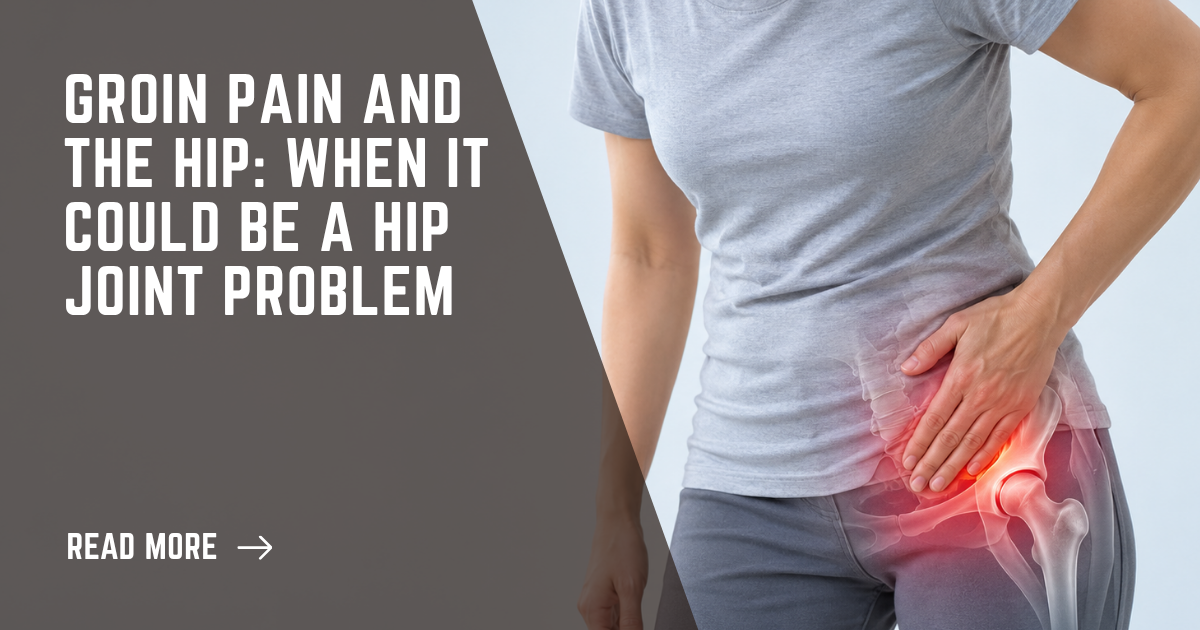
Groin pain can be surprisingly difficult to pinpoint. The discomfort may be felt at the front of the hip, deep in the crease between the thigh and the body, or sometimes along the inner thigh. It may appear after physical activity or develop gradually without an obvious trigger.
Because of its location, many people initially associate groin pain with a pulled muscle, an adductor strain or overuse.
However, certain hip joint conditions can also cause pain in the groin, even when there is no obvious discomfort on the outer side of the hip.
Understanding this connection can help patients recognise when their symptoms may need further assessment.
Why the Hip Joint Can Cause Groin Pain
The hip is a ball-and-socket joint located deep within the pelvis. It connects the thigh bone (femur) to the pelvis and allows movements such as walking, bending, sitting and climbing stairs.
Pain originating from the hip joint is not always felt directly over the joint itself.
Because of the joint's location and nerve supply, discomfort may be experienced in the groin, the front of the thigh or occasionally around the knee. This is known as referred pain, where discomfort is felt in an area different from its underlying source.
As a result, someone experiencing groin pain may not immediately consider the hip joint as a possible cause.
However, groin pain can also arise from muscles, tendons, the lower back, hernias and other conditions. A clinical assessment is needed to understand where the pain is coming from.
What Kind of Groin Pain Might Suggest a Hip Joint Problem?
Groin pain can feel different from person to person. Some people experience a deep ache, while others notice discomfort during specific movements or activities.
Certain symptoms may raise the possibility of hip joint involvement:
-
Deep or aching discomfort in the groin
-
Pain during walking or climbing stairs
-
Stiffness or reduced movement in the hip
-
Discomfort when sitting in a low chair
-
Pain when getting in or out of a car
-
Difficulty bending the hip or performing everyday activities
These symptoms can occur with hip joint conditions, but they may also be associated with muscular, tendon-related or other problems.
No single symptom can reliably confirm that the hip joint is responsible. The pattern of pain, physical examination and, when necessary, investigations help identify the underlying cause.
Which Hip Conditions Can Cause Groin Pain?
Several conditions affecting the hip joint may produce groin discomfort. Each has different causes, symptoms and treatment considerations.
1. Hip Arthritis
Hip arthritis involves changes within the joint that can affect cartilage, movement and comfort.
People with hip osteoarthritis may experience a deep ache in the groin, particularly during activities such as walking, climbing stairs or standing for extended periods.
Other symptoms may include:
-
Stiffness after rest
-
Difficulty bending or rotating the hip
-
Reduced walking comfort
-
Difficulty with activities such as putting on shoes or getting into a car
As arthritis progresses, some people may experience discomfort during rest or at night.
However, the severity of symptoms does not always correspond directly to the changes seen on an X-ray.
2. Hip Labral Conditions
The hip labrum is a ring of cartilage surrounding the socket of the hip joint. It helps maintain stability and supports smooth joint movement.
Changes or tears involving the labrum may be associated with groin pain, particularly during movements that involve bending or rotating the hip.
Some people also experience clicking, catching or a sensation of discomfort during certain movements.
However, clicking or catching alone does not confirm a labral tear. These sensations can occur for several reasons, and labral changes may sometimes be present without causing symptoms.
Clinical findings and appropriate imaging, when indicated, help determine whether a labral condition is contributing to the pain.
3. Hip Impingement
Femoroacetabular impingement (FAI) involves differences in the shape of the hip's ball, socket or both, which can lead to abnormal contact during certain movements.
When these changes cause symptoms, people may experience groin discomfort during activities involving deep hip bending or rotation.
Examples include:
-
Squatting
-
Certain sporting movements
-
Deep bending of the hip
-
Sitting in positions that aggravate symptoms
Hip impingement-related symptoms may occur in physically active adults, although not everyone with these structural changes develops pain.
A diagnosis depends on the combination of symptoms, examination findings and relevant imaging rather than imaging findings alone.
4. Avascular Necrosis of the Hip
Avascular necrosis, also called osteonecrosis, occurs when the blood supply to an area of bone becomes disrupted. In the hip, it can affect the femoral head, which forms the ball of the joint.
In its early stages, the condition may not cause noticeable symptoms.
As it progresses, some people develop pain in the groin, hip or thigh, along with difficulty bearing weight or moving comfortably.
Avascular necrosis may be associated with factors such as previous hip injury, prolonged corticosteroid use and certain medical conditions. Sometimes, no clear cause is identified.
Because early changes may not be visible on standard X-rays, further imaging may be required when clinical suspicion remains.
How Is the Cause of Groin Pain Assessed?
Since groin pain can arise from different structures, understanding the underlying cause begins with a detailed clinical assessment.
An orthopaedic specialist may ask about:
-
When the pain started
-
Whether it developed gradually or followed an injury
-
Which movements or activities make it worse
-
Whether there is associated stiffness or reduced mobility
-
How the symptoms affect walking, sitting, sleeping or daily activities
-
Any relevant medical history or previous injuries
Physical Examination
A physical examination helps assess hip movement, muscle function and the positions that reproduce discomfort.
The doctor may also examine surrounding structures or consider other possible sources of pain, including the lower back and groin region.
Imaging and Investigations
Imaging is selected according to the patient's symptoms, examination findings and suspected condition.
X-rays may be recommended to evaluate the bones and joint structure, particularly when arthritis or certain bony abnormalities are suspected.
In other situations, MRI or additional investigations may be appropriate to assess structures such as cartilage, the labrum or bone changes that may not be visible on an X-ray.
Not every patient with groin pain requires imaging. The decision depends on the clinical assessment.
What Happens If the Hip Joint Is Found to Be the Source?
When assessment confirms that groin pain is originating from the hip joint, the management will depend on what is found and the degree to which the condition is affecting the patient's daily life.
For many patients, particularly those in the earlier stages, non-surgical approaches form the starting point of management. These may include physiotherapy directed at the hip, activity modification, and other options that will be discussed during the consultation.
For patients whose condition has progressed to a stage where conservative management is no longer adequate, surgical options may be discussed.
The most appropriate path forward is always determined through a thorough individual assessment rather than a general recommendation.
When Should Groin Pain Be Assessed?
Occasional groin discomfort may have several explanations. However, persistent or worsening symptoms deserve attention, particularly when they begin affecting everyday activities.
A routine medical assessment may be appropriate if:
-
Groin pain continues or repeatedly returns
-
The discomfort is gradually worsening
-
Hip stiffness or reduced movement develops
-
Walking, climbing stairs or sitting becomes difficult
-
Pain begins affecting sleep or regular activities
-
The cause of the discomfort remains unclear
When Is Urgent Medical Attention Needed?
Some symptoms require prompt medical evaluation rather than waiting for a routine appointment.
Seek urgent medical attention if you experience:
-
Inability to stand or bear weight, particularly after an injury
-
Severe hip or groin pain following a fall or accident
-
A hot, swollen joint accompanied by fever, which may indicate a serious infection
-
Sudden, severe pain accompanied by significant difficulty moving the hip
These symptoms may be associated with conditions that require timely investigation and treatment.
Frequently Asked Questions (FAQs):
1. Can groin pain occur even if my hip X-ray looks normal?
Yes. Some causes of groin pain may not be visible on a standard X-ray.
X-rays are useful for assessing bones and certain joint changes, but they do not show every structure within or around the hip.
Depending on the symptoms and examination findings, a doctor may consider additional investigations, such as MRI, when clinically appropriate.
A normal X-ray does not necessarily rule out every hip-related condition.
2. How is groin pain from a hip problem different from a muscle strain?
Both hip joint conditions and muscle strains can produce groin pain, and their symptoms may overlap.
A muscle strain may follow physical activity, a sudden movement or an injury. It can cause tenderness and discomfort when the affected muscles are stretched or used.
Hip joint conditions may also cause pain during movement, sometimes accompanied by stiffness or reduced hip mobility.
However, these differences are not reliable enough to establish a diagnosis on their own.
The history of symptoms and physical examination help distinguish between possible causes. Recovery from a muscle strain varies depending on the nature and severity of the injury.
3. Is groin pain related to the hip more common in older patients?
Hip joint conditions causing groin pain can affect people across different age groups.
Hip osteoarthritis becomes more common with age, while conditions such as hip impingement and certain labral problems may be encountered in younger and physically active adults.
Avascular necrosis can also affect younger and middle-aged adults, depending on the underlying risk factors.
Age can help guide the clinical assessment, but it does not determine the cause of groin pain by itself.
Understanding Your Symptoms Is the First Step
Groin pain can affect something as simple as walking, climbing stairs or getting into a car.
Although the discomfort may initially seem muscular, the hip joint is one possible source that should be considered when symptoms persist.
Different conditions require different approaches, and identifying the underlying cause helps guide appropriate care.
Paying attention to persistent pain, changes in movement and warning signs can help you make informed decisions about your joint health.
About the doctor:
This article is general health information and is not a substitute for medical advice. Please consult a registered medical practitioner about your own condition.
Dr. Chintan Patel, Orthopaedic Surgeon
Sanjeevani Healthcare, Ghatkopar West, Mumbai.