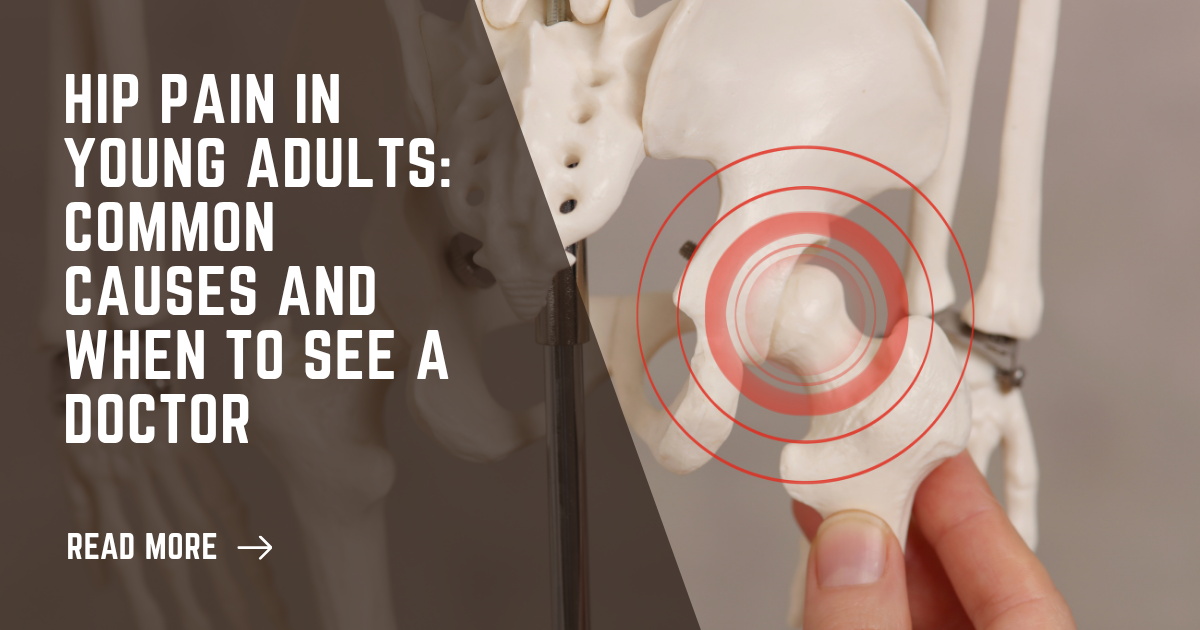
Hip pain in your twenties or thirties can be particularly confusing. There may be no obvious injury, yet certain movements suddenly feel uncomfortable. Getting out of a car, sitting for a long time, climbing stairs, working out, or playing a favourite sport may start feeling different.
It is easy to assume that the discomfort is temporary. A busy week, an intense workout, or an awkward movement may seem like an obvious explanation. Sometimes the pain settles on its own. At other times, it keeps returning and slowly starts influencing the way you move or the activities you choose.
Hip pain at a younger age does not necessarily point to one particular problem. It could be related to an injury, physical activity, muscle or tendon discomfort, or an issue involving the hip itself. Understanding when the pain started, what brings it on, and how it is affecting everyday life could provide useful information when deciding whether an assessment may be appropriate.
Where Does the Pain Actually Come From?
When people say their "hip hurts," they may not always be referring to the same area.
Some may notice discomfort towards the front of the hip or around the groin. Others may feel it towards the side of the hip, upper thigh, or buttock. The location could also change depending on the movement or activity.
This is one reason it may be difficult to work out the cause simply by searching for symptoms online. The same general area could feel uncomfortable for different reasons, and the pattern of symptoms may be more useful than the location alone.
Paying attention to when the discomfort appears can therefore be helpful. Does it happen after exercise? While sitting? When climbing stairs? After getting out of a car? Or does it appear without any particular activity?
These details could give an orthopaedic surgeon a better understanding of what you have been experiencing.
Could an Old Injury Be Connected?
A previous injury may sometimes be relevant even when it happened quite some time ago.
A fall, sports injury, sudden twist, or strain may have seemed to settle at the time. However, if discomfort later returns around the same area, the earlier injury could be one of the factors worth discussing during an assessment.
This does not mean that an old injury is necessarily responsible for current hip pain. It is simply part of the history that may help put the current symptoms into context.
This can be particularly relevant for people who are active in sports or fitness. Returning to the same activities after an injury may feel completely fine initially, while discomfort may appear later during particular movements or higher levels of activity.
When Exercise Becomes Part of the Problem
For someone who exercises regularly, hip discomfort can be difficult to interpret. There may be no single moment of injury. Instead, the pain may become noticeable gradually after running, gym workouts, dancing, cycling, football, or another activity.
Some people may notice discomfort during exercise. Others may only become aware of it afterwards. Certain movements may feel more uncomfortable than others, while everyday walking may not cause much trouble.
The important point is not to assume that exercise itself is necessarily the cause. Your activity level, the type of movement involved, previous injuries and your overall circumstances could all be relevant.
If a particular activity repeatedly brings the same discomfort back, that pattern is worth mentioning during an assessment rather than simply pushing through it or stopping every form of exercise without understanding why.
What About Sitting All Day?
Hip discomfort is not limited to people who play sports.
Long hours at a desk can change the way a person experiences everyday movement. Someone who spends most of the day sitting may notice discomfort when getting up from a chair, after a long meeting, during a commute, or at the end of a working day.
For some young adults, the first sign that something is changing may simply be that sitting no longer feels as comfortable as it once did.
If this happens occasionally and settles, it may not become a major concern. But when the discomfort keeps returning or begins interfering with work, exercise, travel, or other parts of daily life, it may be worth understanding what is behind it.
When Should Hip Pain Be Taken Seriously?
Not every episode of hip discomfort requires an immediate consultation. A temporary ache after an unfamiliar activity may settle with time and a change in routine.
The situation deserves more attention when the problem keeps returning, gradually becomes more noticeable, or begins affecting the way you live.
For example, you may start avoiding a sport you enjoy, find certain movements increasingly uncomfortable, change the way you walk, or feel hesitant about activities that were previously part of your normal routine.
These changes do not automatically mean that there is a serious problem. They may simply be a reason to stop guessing and have the symptoms properly assessed.
An early conversation with an orthopaedic surgeon could help clarify what may be contributing to the discomfort and whether any further evaluation may be appropriate.
What If the Pain Keeps Coming Back?
An occasional episode of discomfort may not change much about your routine. Recurring pain is different. When the same discomfort keeps appearing after certain activities or begins returning even when your routine has not changed, it becomes harder to simply put it down to a busy day or a strenuous workout.
The pattern itself can be useful. You may notice that the pain appears after particular movements, becomes more noticeable after sitting, or returns whenever you increase your activity. Keeping track of these changes could make it easier to describe the problem during a consultation.
The purpose is not to monitor every sensation or become anxious about normal aches. It is simply to recognise when something has become persistent enough to deserve attention.
How Hip Pain Could Affect Everyday Life
Hip pain does not always begin by stopping someone from doing an activity completely. It may first appear as a small adjustment to the way they live.
You may choose the lift instead of the stairs, shorten a walk, avoid sitting in a particular position, or stop participating in an activity that you previously enjoyed. These changes can happen gradually, sometimes without being noticed until the discomfort has been present for some time.
For a young adult, these changes may be particularly frustrating because work, fitness, travel and social activities often form a significant part of everyday life. When hip discomfort begins influencing those choices, it may be worth looking beyond temporary relief and understanding what could be contributing to the problem.
What Happens During an Orthopaedic Assessment?
An assessment usually begins with a conversation about the symptoms rather than immediately moving towards treatment. The doctor may ask when the discomfort started, where it is felt, whether there was an injury, which activities bring it on and how it has affected your routine.
A physical examination may then form part of the assessment. Depending on what is found, further evaluation may or may not be considered appropriate.
There is no need to arrive with a diagnosis already in mind. Describing what you have been experiencing, including changes in your activities or movements, may provide more useful information than trying to identify the condition yourself.
Should You Stop Exercise Because of Hip Pain?
Stopping every form of physical activity is not necessarily the answer simply because hip discomfort has appeared. At the same time, continuing with an activity that repeatedly causes problems without understanding what is happening may not provide much clarity either.
A more considered approach is to understand your symptoms first. Depending on the situation, the discussion could include changes to your current routine or other ways of remaining active that may be more appropriate for you.
For someone who enjoys fitness or sport, this does not have to mean giving up an active lifestyle. It may simply mean understanding what your hip currently needs and making decisions accordingly.
When Is It Worth Seeking an Assessment?
A consultation may be worth considering when hip pain continues to return, begins interfering with work or exercise, changes the way you move, or makes activities that once felt routine increasingly difficult.
It may also be worth seeking advice when there is no obvious explanation for the discomfort and trying to manage it independently has not given you enough clarity.
The purpose of an assessment is not to assume that surgery or any particular treatment will be required. It is an opportunity to understand the symptoms properly and discuss what options may be appropriate for your situation.
If You Would Like to Understand Your Hip Pain Better
If you are experiencing persistent hip discomfort and would like to better understand what may be contributing to it, you may consider consulting Dr. Chintan Patel. An individual assessment could help review your symptoms, understand how they are affecting your daily life and discuss the options that may be appropriate for your situation.
Dr. Chintan Patel consults at Sanjeevani Healthcare in Ghatkopar, Mumbai, and at several other hospitals across Mumbai.
Frequently Asked Questions
Is hip pain common in young adults?
Hip discomfort may occur at any age, and there could be several reasons for experiencing it at a younger age. An assessment may be helpful when the pain is persistent, recurring or affecting your usual activities.
Should I stop exercising if I have hip pain?
Not necessarily. The appropriate approach may depend on what is contributing to your symptoms and which activities are involved. If exercise repeatedly brings on discomfort, discussing it with an orthopaedic surgeon could provide greater clarity.
Could an old sports injury be related to my current hip pain?
It could be one factor worth discussing, particularly if the discomfort is occurring around an area that was previously injured. However, an old injury does not automatically explain current symptoms, so an assessment may be needed to understand the situation.
When should I see an orthopaedic surgeon for hip pain?
You may consider an assessment if the discomfort keeps returning, begins affecting your work or exercise, changes the way you move, or makes everyday activities increasingly difficult.
Could hip pain in a young adult require treatment?
The appropriate approach depends on what is contributing to the symptoms. Treatment may not necessarily involve surgery. Depending on the assessment, different options could be discussed according to your condition, lifestyle and needs.
Where can I consult Dr. Chintan Patel for hip pain in Mumbai?
Dr. Chintan Patel consults at Sanjeevani Healthcare in Ghatkopar, Mumbai, and at several other hospitals across Mumbai.