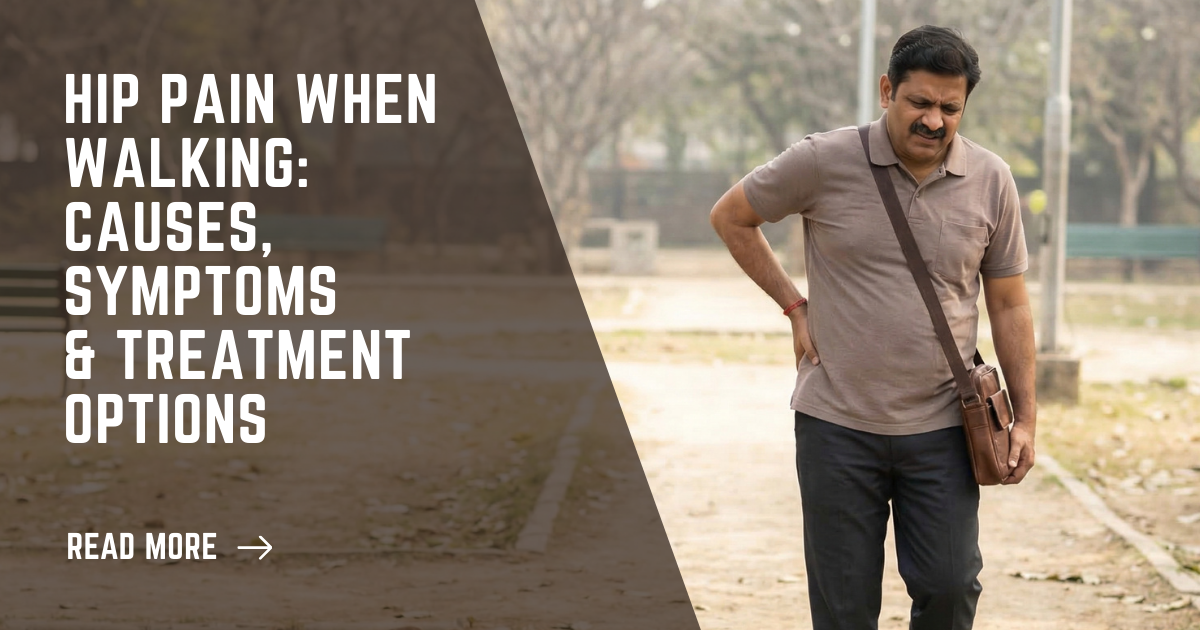
Hip pain when walking is one of the most common complaints seen in orthopedic practice. Many patients say, “It only hurts when I walk” and often spend weeks or months adjusting their daily routine around the discomfort without realising it needs proper attention.
Whether the pain is felt in the groin, on the outer side of the hip, or radiating toward the thigh or buttock, discomfort that appears specifically during walking is a signal that something within the joint or surrounding muscles requires evaluation.
The good news is that when identified early, many causes of hip pain respond well to non-surgical treatment. This guide explains the causes, symptoms, when to seek medical advice, and what treatment options are effective.
Why Does Hip Pain Occur Specifically When Walking?
The hip is a weight-bearing joint. Every step places load through the joint as it transfers body weight from the pelvis to the lower limb. This is very different from sitting or lying down, where the joint is relatively unloaded.
When there is a structural or functional issue such as cartilage wear, inflammation, muscle weakness, or reduced blood supply, repetitive loading during walking tends to bring out the pain. Sitting may feel comfortable, but walking becomes difficult.
Identifying the exact cause is important because different conditions require different treatments. Early diagnosis leads to better outcomes.
Common Causes of Hip Pain When Walking
1. Osteoarthritis of the Hip
Osteoarthritis is a leading cause of hip pain, especially in individuals over 50. It involves gradual wear of the cartilage that cushions the joint.
Typical symptoms include a dull ache in the groin, stiffness after rest, and discomfort that worsens with activity. Early management with physiotherapy, strengthening, and weight control can help slow progression.
2. Hip Bursitis (Trochanteric Bursitis)
The bursa is a fluid-filled structure that reduces friction between tissues. When inflamed, it causes pain on the outer side of the hip.
Pain may worsen while walking, climbing stairs, or lying on the affected side. This condition often improves with physiotherapy and targeted treatment.
3. Muscle Weakness or Strain
Weak hip muscles, often due to prolonged sitting or sudden increase in activity, can lead to pain during walking.
In such cases, the joint may appear normal on imaging. The issue is related to muscle function and usually improves with structured exercises.
4. Labral Tear or Femoroacetabular Impingement (FAI)
Younger individuals may experience a catching or locking sensation in the hip along with groin pain. This may be due to labral injury or abnormal contact between the hip bones.
Evaluation and imaging help determine the appropriate treatment, which may include physiotherapy or minimally invasive procedures.
5. Avascular Necrosis (AVN)
AVN occurs when blood supply to the femoral head is affected. This can lead to progressive joint damage if not identified early.
Pain may initially appear only during walking and later progress. Early diagnosis allows for more treatment options.
6. Referred Pain from the Spine
Pain in the hip region may sometimes originate from the lower back. A proper clinical assessment helps differentiate between hip and spine-related causes.
7. Stress Fractures
Stress fractures can occur in individuals with high activity levels or reduced bone strength. They typically present as groin pain that worsens with weight-bearing.
Symptoms to Watch For
-
Pain in the groin or deep inside the hip
-
Pain on the outer side of the hip
-
Pain radiating to the thigh or buttock
-
Stiffness after sitting
-
Difficulty climbing stairs
-
Limp while walking
-
Reduced walking distance
-
Clicking or catching sensation
-
Morning stiffness
-
Discomfort when lying on the affected side
Gradually worsening symptoms should not be ignored, especially if they affect daily activity.
When Should You See an Orthopedic Doctor?
Medical evaluation is recommended if:
-
Pain persists beyond several days
-
Walking pattern changes or limping begins
-
Walking distance reduces
-
Stiffness increases
-
Pain affects sleep
-
There is a history of injury or fall
-
Risk factors such as steroid use are present
Early assessment often leads to simpler treatment.
Hip Pain Treatment Options
Non-Surgical Treatment
Most patients improve with:
-
Short-term medication for pain relief
-
Structured physiotherapy
-
Strengthening exercises
-
Gait correction
-
Activity modification
-
Weight management
-
Postural correction
Improvement is often seen within a few weeks when treatment is started early.
In selected cases, injections may be used as part of treatment.
When Is Surgery Considered?
Surgery may be considered when:
-
Pain significantly affects daily life
-
Conservative treatment is not effective
-
Structural damage is confirmed
Treatment is always individualised based on the condition.
How to Prevent Hip Pain When Walking
-
Maintain a healthy weight
-
Strengthen hip and core muscles
-
Increase activity gradually
-
Stretch regularly
-
Avoid prolonged sitting
-
Use supportive footwear
-
Monitor risk factors
Frequently Asked Questions
Can hip pain when walking go away on its own?
Some causes - such as minor muscle strains - do resolve with rest and time. However, if pain persists beyond 7-10 days, is progressive, or is accompanied by a limp, it is unlikely to resolve without treatment. Waiting too long often means a more complicated recovery.
Is hip pain when walking always a sign of arthritis?
No. While osteoarthritis is the most common cause, particularly in older adults, there are many other potential diagnoses - including bursitis, muscle weakness, labral tears, AVN, and referred pain from the spine. Accurate diagnosis is essential before any treatment is started.
What is the difference between hip pain and lower back pain?
Hip joint pain typically presents in the groin and worsens with walking and hip rotation. Lower back pain more commonly radiates into the buttock, thigh, or leg. The two can co-exist, which is why clinical examination by a specialist is the most reliable way to differentiate them.
How do I know if I need a hip replacement?
Hip replacement is considered only when pain is severe, persistent, and significantly impacting daily life - and when conservative treatment has been adequately tried without success. Imaging findings are taken into account alongside clinical presentation. The decision is always individualised.
Is hip pain treatable without surgery in most cases?
Yes - in the majority of cases, particularly when the condition is diagnosed at an early or moderate stage. A targeted combination of physiotherapy, medication, lifestyle modification, and where appropriate, injection therapy, allows most patients to return to comfortable walking without surgery.
Book a Consultation for Hip Pain
If hip pain is affecting your ability to walk or perform daily activities, early evaluation can help identify the cause and guide treatment. Dr. Chintan Patel provides specialist orthopedic care for hip and knee pain. He operates from his clinic in Ghatkopar, Mumbai, as well as other prominent locations. Consultations involve detailed assessment, accurate diagnosis, and personalised treatment planning, with a focus on non-surgical management wherever possible.
With the right approach, most patients are able to return to comfortable walking and daily activity.