Recovering from knee replacement surgery is a process that extends well beyond the time spent in hospital. The procedure addresses the structural changes within the knee that have been causing pain and limiting movement, but the process of rebuilding strength, restoring function, and returning to normal daily activities takes place in the weeks and months that follow.
During this time, questions may arise about physiotherapy, exercises, walking, personal care, work and other daily activities. Understanding what physiotherapy after knee replacement involves, when it begins, and why it is an important part of recovery helps patients approach this stage with realistic expectations.
What Is Physiotherapy After Knee Replacement?
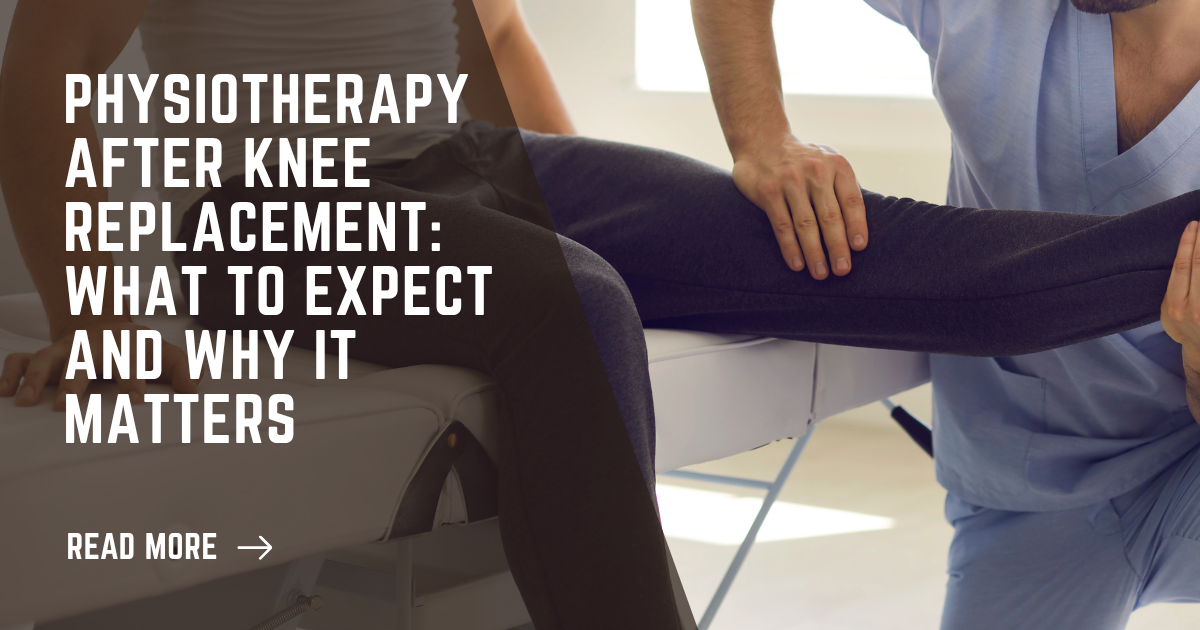
Physiotherapy after knee replacement is a structured programme of exercises, movement guidance, and activity progression designed to support the recovering knee. The programme is developed around the individual patient's procedure, health, and recovery goals, and is delivered by a physiotherapist who works alongside the surgical team.
The aims of physiotherapy are to restore the range of movement in the knee, rebuild the strength of the muscles that support and control the joint, and guide the patient's gradual return to daily activities, work, and where appropriate, sport and exercise.
When Does Physiotherapy Begin?
Physiotherapy typically begins during the hospital stay, often on the day of or the day after surgery. Early movement is considered important for recovery, and the physiotherapist will guide initial exercises and mobility from the earliest appropriate point. This early phase is focused on basic movement getting the knee bending and straightening, beginning to bear weight safely, and preparing for discharge home.
What Happens During the First Physiotherapy Sessions?
In the immediate post-operative period, the physiotherapy sessions focus on straightforward exercises designed to promote circulation, begin to restore movement, and support safe mobility with the appropriate walking aid. The physiotherapist will explain each exercise and demonstrate correct technique.
These early sessions also provide an opportunity for the patient to ask questions and raise any concerns about particular movements, activities, or what to expect in the days immediately ahead. Clear communication between the patient and physiotherapist is an important part of making early recovery as smooth as possible.
What Exercises Are Included After Knee Replacement?
The exercises included in a post-knee-replacement physiotherapy programme build progressively. Early exercises focus on movement and circulation. As recovery progresses, exercises directed at strengthening the quadriceps, hamstrings, and hip muscles become more central to the programme.
The specific exercises will depend on the individual's procedure, the stage of recovery, and how the knee is responding. The physiotherapist will adjust the programme over time based on the patient's progress rather than following a rigid schedule.
What Happens After Leaving the Hospital?
After discharge from hospital, physiotherapy continues as an outpatient either at a clinic, in the patient's home if a home physiotherapy service has been arranged, or both. The consistency with which the home exercise programme is completed between formal sessions makes a meaningful difference to the pace of recovery.
The physiotherapist will provide clear instructions about which exercises to do at home, how often to do them, and what to watch for. Questions that arise between sessions should be noted and raised at the next appointment rather than leading to independent changes to the programme.
How Does Physiotherapy Relate to Daily Activities?
Physiotherapy does not exist in isolation from daily life. The exercises and guidance provided are directly related to the activities the patient needs to be able to perform walking, using stairs, getting in and out of chairs and vehicles, and eventually returning to work and more active pursuits.
Progress in physiotherapy is measured partly by functional milestones the point at which walking with a frame transitions to a stick, the point at which stairs become manageable, the point at which sitting and standing from a normal-height chair is comfortable. These milestones are discussed with the physiotherapist and form part of the overall recovery plan.
What If an Exercise Feels Difficult?
Some degree of discomfort during physiotherapy exercises is expected, particularly in the early weeks. The distinction between the manageable effort required to restore movement and pain that suggests the exercise is not appropriate is one that the physiotherapist can help identify. Patients should communicate openly about what they are experiencing rather than pushing through significant pain independently.
How Long Does Physiotherapy Continue?
Physiotherapy after knee replacement does not follow a fixed duration. The length of the programme depends on the individual's recovery, the goals being worked towards, and how the knee is responding over time. Some patients complete a formal programme within a matter of months; others benefit from a longer period of guided rehabilitation.
The physiotherapist and treating surgeon will review progress at follow-up appointments and advise on when formal physiotherapy can be concluded or reduced, based on the individual's function and confidence in managing independently.
Returning to Exercise After Knee Replacement
Returning to exercise and more active pursuits after knee replacement is a gradual process. The types of activity that are appropriate, and when they can be reintroduced, depend on the individual's recovery and will be discussed with the physiotherapist and treating team.
Low-impact activities are generally more appropriate in the earlier stages. More demanding activities are reintroduced progressively as strength and movement improve. Patients with specific exercise goals returning to swimming, cycling, golf, or other activities are encouraged to raise these during the programme so that the plan can be oriented towards them.
Returning to Work After Knee Replacement
Return to work after knee replacement depends on the nature of the work and the stage of recovery. Desk-based work may be possible sooner than work involving prolonged standing, walking, or physical effort. The appropriate timing for returning to work is something to discuss with the treating team and physiotherapist based on the individual's job and recovery progress.
Driving and Travel After Knee Replacement
Driving and travel after knee replacement are practical considerations that are often raised during physiotherapy. Driving requires a sufficient degree of leg strength, movement, and reaction time, and the appropriate point at which this is safe to resume will be guided by the treating surgeon. Travel whether by car, train, or air involves practical considerations around sitting, leg movement, and prolonged immobility that can be discussed during follow-up.
What Role Does the Patient Play?
Physiotherapy after knee replacement is a collaborative process. The physiotherapist provides the programme and the guidance, but the patient's consistent effort in completing the exercises and following the recommended guidance is what drives the recovery. Attending all scheduled physiotherapy appointments, completing the home exercise programme, and communicating openly about any concerns are the most important contributions a patient can make.
What Role Can Family Members Play?
Family members can support recovery in practical ways helping with transport to appointments, assisting with household tasks to allow the patient to focus on rehabilitation, and providing encouragement. Understanding the broad requirements of the physiotherapy programme helps family members support appropriately without inadvertently encouraging activities that are not yet suitable.
What If the Physiotherapy Plan Changes?
Physiotherapy plans are adjusted as recovery progresses. What is appropriate in the first week is different from what is appropriate after several weeks of recovery. Changes to the plan are a normal part of the process and reflect how the knee is responding. Patients should not be concerned if exercises change or if the programme is adjusted this is part of the physiotherapist's assessment of progress.
When Should You Speak to Your Physiotherapist or Doctor?
Any of the following should prompt a conversation with the physiotherapist or treating team: significant increase in pain or swelling that is not accounted for by the current stage of recovery, difficulty with a particular exercise or activity that is not improving with practice, fever or any change in the wound, or any other symptom that feels unexpected.
Preparing for Follow-Up Appointments
Follow-up appointments with the treating surgeon are an opportunity to review the knee, assess progress, and discuss any concerns that have arisen. Keeping a note of questions between appointments about activities, exercises, recovery expectations, or any symptoms allows the appointment time to be used most effectively.
Physiotherapy After Knee Replacement in Mumbai
Patients may have questions about exercises, movement, daily activities, work, travel and the length of the physiotherapy programme. These are all appropriate topics to raise with the physiotherapist or treating team.
Consult Dr. Chintan Patel for Knee and Hip Care
If a patient would like to understand more about what recovery after knee replacement involves, or has questions about physiotherapy and rehabilitation, a consultation can provide guidance based on the individual's specific situation.
Dr. Chintan Patel is a robotic orthopaedic surgeon specialising in knee and hip replacement. He consults at Sanjeevani Healthcare in Ghatkopar, Mumbai, as well as other prominent locations.
An individual consultation can help patients better understand their condition and the treatment options available.
Frequently Asked Questions (FAQs):
Q: Why can physiotherapy exercises differ between patients?
A: The exercises included in a physiotherapy plan may differ according to the individual treatment plan and the patient's circumstances. The physiotherapist can explain which exercises are appropriate for you.
Q: What should I discuss if I want to return to a particular activity?
A: You can discuss the specific activity you want to return to, such as exercise, sport, work or travel. The treating team or physiotherapist can explain how it may fit into your recovery.
Q: What should family members know about the physiotherapy plan?
A: Family members can familiarise themselves with the instructions provided to the patient and help with practical responsibilities such as meals, transport, appointments and household tasks.
Q: What should I do if my physiotherapy instructions change?
A: If an instruction changes or you are unsure about whether an exercise or activity should remain part of your routine, ask the physiotherapist or treating team for clarification rather than changing the plan independently.