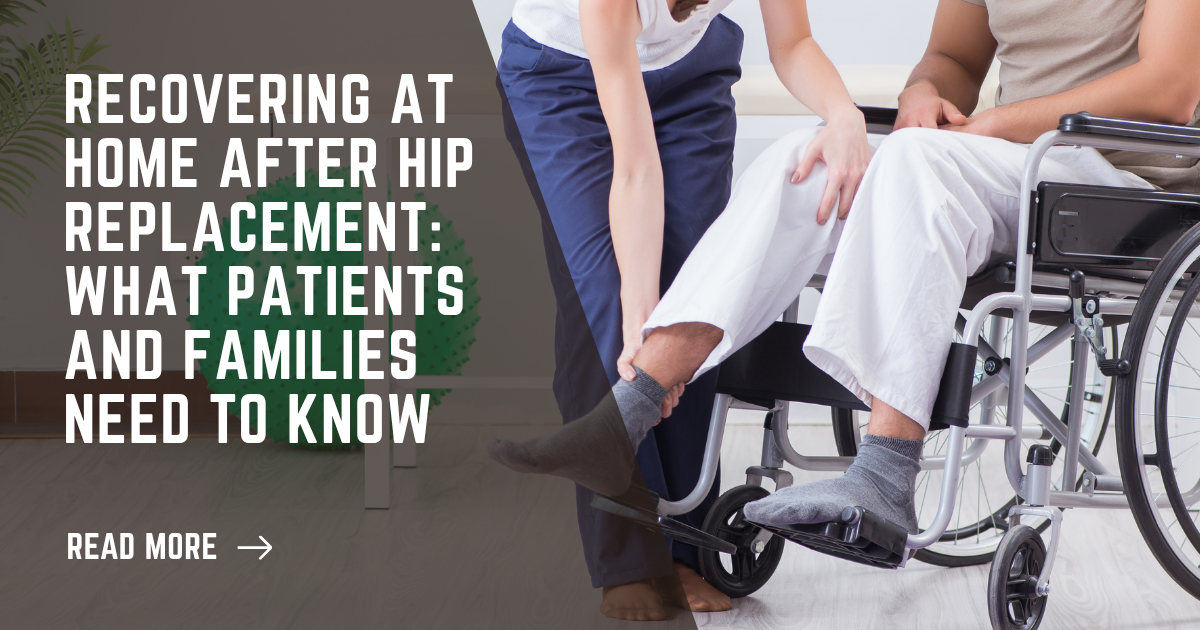
The first few weeks at home after hip replacement surgery mark an important stage in the recovery process. The hospital provides a structured environment with immediate access to the medical team, physiotherapy, and nursing care. Home is different and preparing for it in advance makes a meaningful difference to how smoothly the early weeks ago.
This guide covers the practical aspects of home recovery after hip replacement what to prepare, how to organise the home environment, how family members can help, and what signs to watch for. The specific instructions provided by the treating surgical team always take precedence over general guidance.
Preparing Your Home Before Hip Replacement
Preparing the home before the surgery date, rather than after returning from hospital, makes the transition much easier. The key is to reduce the need for bending, reaching, or navigating obstacles that could be difficult in the early stages of recovery.
Clearing away loose rugs or objects on the floor that could be a trip hazard is an important first step. Arranging a main recovery space whether a bedroom or sitting room on the ground floor avoids unnecessary stair use in the early weeks if the home is multi-storey. Having a firm chair with armrests, at an appropriate height, makes sitting down and standing up easier. Essential items medication, phone charger, water, reading material should be within reach rather than requiring bending or stretching.
Handrails in the bathroom and non-slip mats in the shower area are worth checking in advance. Any adaptations that may be needed a raised toilet seat, a long-handled shoe horn, a shower chair can be arranged before the surgery date to avoid managing this on return home.
Planning the First Week at Home
The first week at home is generally the most demanding in terms of adjusting to the new routine. Movement will be limited, and the body is still in the early stages of healing. The priority during this period is following the instructions provided by the hospital particularly regarding movement precautions, medications, wound care, and physiotherapy exercises.
Rest is important, but so is gentle movement. The physiotherapy team will have provided guidance on exercises to do at home from the early days. These exercises support recovery and should be performed as directed, even if progress feels slow at first.
Moving Around the House
Moving around the home in the early weeks requires care and patience. Walking aids such as a frame or crutches will typically be used initially, and it is important to use these correctly and for as long as the treating team recommends.
Surfaces matter. Smooth floors can be slippery, particularly with socks or loose footwear. Wearing supportive, non-slip footwear indoors reduces the risk of a fall. Where possible, keeping the path between the main recovery area and the bathroom clear and unobstructed reduces the effort required and the potential for difficulty.
Getting In and Out of Bed
The treating team will have provided instructions on the safest way to get in and out of bed after hip replacement. These instructions vary depending on the surgical approach and the specific precautions that apply to the individual patient, which is why following the guidance given rather than general information is important.
The bed height matters. A bed that is too low makes it significantly harder to stand up from and sit down onto safely. Raising the bed on blocks, or using a mattress topper to increase height, may be recommended for some patients. This is worth planning before the surgery date.
Choosing a Suitable Chair
A chair that is too low makes it difficult to sit down and stand up safely after hip replacement. A firm chair with solid armrests, at a height that allows the feet to rest flat on the floor while the hips sit at approximately a right angle, is generally more suitable in the early weeks.
Sofas and low chairs that require a deep bend at the hip to sit down, or significant effort to rise from, are best avoided during the early recovery period.
Using the Bathroom
Using the bathroom independently is an important milestone in recovery. A raised toilet seat reduces the depth of bend required when sitting down and standing up, which is relevant for patients with hip precautions. Grab rails near the toilet and in the shower provide stability and confidence.
The treating team will have advised on what precautions apply to the individual patient in the bathroom, and these should be followed carefully. If any adaptation is uncertain, the physiotherapy or nursing team should be consulted before attempting the activity.
Dressing and Personal Care
Dressing in the early weeks after hip replacement requires some adjustment, particularly for clothing and footwear that normally involves bending. Long-handled aids such as a sock aid, a long-handled shoe horn, and a dressing stick can make this process more manageable without requiring bending beyond the level advised.
Clothing with elasticated waistbands and shoes that can be put on without bending are practical choices during this period. The physiotherapy team can advise on dressing techniques that comply with the relevant movement precautions.
Meals and Kitchen Planning
Preparing meals requires standing and moving around the kitchen, which may be tiring in the early weeks. Planning ahead preparing or batch cooking meals before the surgery date, asking family members or friends to prepare food in the early days reduces the demand on the recovering patient.
Frequently used items should be stored at a height that does not require reaching up or bending down. A perching stool or high chair can allow some kitchen tasks to be done in a seated position, reducing the period of standing required.
Managing Household Chores
Most household chores will need to be delegated or deferred during the early weeks of recovery. Bending, reaching, carrying heavy items, and activities that involve getting down to floor level are generally not appropriate during the early recovery period, and the treating team will have given guidance on what to avoid.
Planning which household tasks will need support from family members or another person in the weeks after surgery and arranging this in advance avoids unnecessary strain and allows the patient to focus on recovery.
Organising Medicines
Medications prescribed after hip replacement including those for pain management and any other ongoing medications should be organised before leaving the hospital. Having a clear understanding of what each medication is for, when it should be taken, and for how long is important for managing the early recovery period effectively.
Keeping medicines in an easily accessible place, along with any written instructions provided by the hospital, makes daily management simpler. If there is any uncertainty about medications, the hospital or pharmacist should be contacted rather than making changes independently.
Keeping Track of Appointments
Follow-up appointments wound checks, physiotherapy sessions, and surgical review are an important part of the post-operative care plan. Keeping a note of these dates and arranging transport in advance is sensible, particularly in the early weeks when driving is not yet appropriate.
If a follow-up appointment needs to be rescheduled, contacting the clinic as early as possible allows an alternative time to be arranged without disrupting the review schedule.
Understanding the Physiotherapy Plan
The physiotherapy plan provided after hip replacement is specific to the individual patient and the procedure performed. It will typically include exercises to begin in the early days of recovery, as well as guidance on activity and movement that builds progressively over the weeks that follow.
Completing the prescribed exercises consistently even on days when motivation is lower is an important part of the recovery process. If a particular exercise is causing significant discomfort rather than manageable effort, this should be discussed with the physiotherapist rather than simply stopped.
How Family Members Can Help
Family members play an important supporting role during home recovery. Practical help with meals, shopping, transport to appointments, and household tasks takes significant pressure off the recovering patient.
It is also helpful for family members to be familiar with the movement precautions and the physiotherapy exercises provided, so that they can support the patient without inadvertently encouraging movements that are not yet appropriate. Attending a physiotherapy session or review appointment, where the patient is willing, can be a useful way for family members to understand the recovery plan.
Managing Visitors
Visitors in the early weeks of recovery can be welcome for emotional support but can also be tiring. Planning visiting arrangements keeping visits shorter and less frequent in the early weeks, and allowing the patient to indicate when they feel up to seeing people is a practical consideration that family members can help manage.
Creating a Simple Daily Routine
Establishing a simple daily routine in the early weeks of recovery helps provide structure, ensures that exercises and medications are not forgotten, and makes the recovery process feel more manageable. A routine does not need to be rigid, but having a general pattern to the day can be helpful.
Working From Home
For patients who work from home, returning to desk-based or computer work may be possible relatively early in the recovery period, depending on the nature of the work and how recovery is progressing. The key considerations are sitting comfort, the ability to take regular short breaks to move around, and whether the pain and concentration levels at that stage allow for productive work.
Any return to work from home or otherwise should be discussed with the treating team rather than assumed to be appropriate based on a general timeline.
Returning to Exercise
Returning to more active forms of exercise after hip replacement is a gradual process guided by the physiotherapy programme and the treating surgical team. Swimming and cycling are among the activities commonly discussed as longer-term options for patients after hip replacement, though timing and appropriateness depend on the individual's recovery.
The progression from early mobility exercises to more active participation in sport or recreational activity will be outlined as part of the physiotherapy programme, and questions about specific activities should be raised with the physiotherapist or treating team.
Planning for Travel
Travel after hip replacement whether by car, train, or air raises practical questions about sitting comfort, leg positioning, and the risk associated with prolonged immobility. The timing of any planned travel and the considerations involved should be discussed with the treating surgical team before making arrangements.
Driving After Hip Replacement
Returning to driving after hip replacement depends on the individual's recovery and the specific requirements for safe vehicle operation. This includes the ability to respond quickly, the comfort and range of movement in the hip, and whether any pain or medication is affecting concentration.
Patients should seek specific guidance from their treating surgeon about when it is appropriate to consider driving again, rather than returning based on a general expectation.
What If Something Does Not Feel Right?
Patients should be familiar with the signs that warrant contacting the treating team or seeking medical attention. These include increased pain that was not present before, significant new swelling, changes to the appearance of the wound, fever, or any other symptom that seems unusual or that is not accounted for by the discharge instructions.
When something does not feel right, contacting the treating team is always the appropriate response. The patient is better placed to manage recovery confidently when they know what to watch for and who to contact.
How Long Does Home Recovery Take?
The length of home recovery varies between individuals and depends on a number of factors including age, overall health, the nature of the procedure, and how consistently the rehabilitation programme is followed. The treating team will provide guidance on expected milestones based on the individual's specific situation.
When Should the Healthcare Team Be Contacted?
Any of the following warrant contacting the healthcare team: increasing pain rather than gradual improvement, significant new swelling, changes to the wound, fever, or any other symptom outside what the discharge instructions describe as normal. When in doubt, contacting the team directly is always the appropriate course of action.
Hip Replacement Home Recovery in Mumbai
Patients preparing for home recovery after hip replacement in Mumbai and surrounding areas can speak with the treating surgical team about the specific preparations and support arrangements that are most appropriate for their individual situation.
Consult Dr. Chintan Patel for Knee and Hip Care
If a patient or family member would like to understand more about preparing for home recovery after hip replacement, a consultation can provide guidance tailored to the individual's circumstances.
Dr. Chintan Patel is a robotic orthopaedic surgeon specialising in knee and hip replacement. He consults at Sanjeevani Healthcare in Ghatkopar, Mumbai, as well as other prominent locations.
An individual consultation can help patients better understand their condition and the treatment options available.
Frequently Asked Questions (FAQs):
Q: How can family members prepare to help after hip replacement?
A: Family members can discuss responsibilities such as meals, shopping, transport, household work and appointment reminders before surgery. It can also help to agree on which tasks the patient would like assistance with.
Q: What should I ask before leaving the hospital for home?
A: You may want to ask about movement around the home, medicines, physiotherapy instructions, wound care, follow-up appointments and whom to contact if you have a concern.
Q: What household responsibilities may need to be planned after hip replacement?
A: Tasks such as cooking, shopping, laundry, cleaning and childcare may need to be shared or adjusted temporarily. Discussing these responsibilities before surgery can help the household plan for the recovery period.
Q: What should I do if I am unsure about an activity after hip replacement?
A: If you are unsure whether an activity is appropriate, ask the treating healthcare or physiotherapy team for guidance. The instructions provided for your individual treatment should remain the main reference.
Q: What should I keep ready for follow-up after hip replacement?
A: It can be useful to keep discharge paperwork, appointment details, relevant contact information and a list of questions or concerns together so they are easy to refer to during follow-up.